Job Security as an Ancient Egyptian Deity
Job security varied wildly in the Egyptian pantheon. If you were Osiris, god of the dead, your temples got funded for three thousand years because the dead kept needing to be buried. If you were Ptah, patron of craftsmen at Memphis, same deal. But if you were Aten, sun disk of Akhenaten's monotheistic experiment, you got one pharaoh's worth of temple building and then your temples were dismantled for fill in someone else's pylons.
Or at least, that is what the pharaohs' names suggest. Egyptian pharaohs carried theophoric names: Amenhotep means "Amun is pleased." Thutmose means "born of Thoth." Ramesses means "Ra bore him." These were not casual choices. When Akhenaten changed his name from Amenhotep IV, he was announcing a theological break with the most powerful priestly institution in the ancient world. The names were political allegiances, and they changed when the politics changed.
I catalogued every pharaoh's theophoric name elements across all 31 dynasties (c. 3100-30 BC), cross-referenced them with temple construction records, and found what looks like two distinct mechanisms of persistence in Egyptian religion. Some gods were politically mediated: their fortunes rose and fell with the factions that championed them. Others were socially indispensable: tied to recurring, regime-independent processes like craft production, ecological cycles, and death. The pattern is suggestive, and the data bears it out more clearly than I expected.
The Data
Egyptian pharaohs carried theophoric names: names containing a god's name as a component. A pharaoh's birth name (nomen) and throne name (prenomen) were theological statements, declarations of which god the ruling family considered paramount. I tracked 12 gods across 29 dynasties: 𓁩 Amun, 𓆊 Sobek, 𓅃 Montu, 𓅝 Thoth, 𓃩 Set, 𓇳 Ra, 𓇯 Aten, 𓅂 Horus, 𓃟 Khnum, 𓂀 Hathor, 𓇹 Iah, and 𓋡 Neith.
Most cells are empty. The non-empty cells cluster tightly by period. And certain gods appear, dominate, and then vanish entirely. This is not what you would expect if theophoric naming were random or merely traditional. It looks like politics.
The Handoff
The story begins in Dynasty 11 (c. 2134 BC) with 𓅃 Montu, the Theban war god. All four Mentuhotep kings, "Montu is pleased," reunified Egypt after the First Intermediate Period. Montu was the patron of a warlord dynasty, and his name was a battle flag. Then he vanishes from royal names entirely.
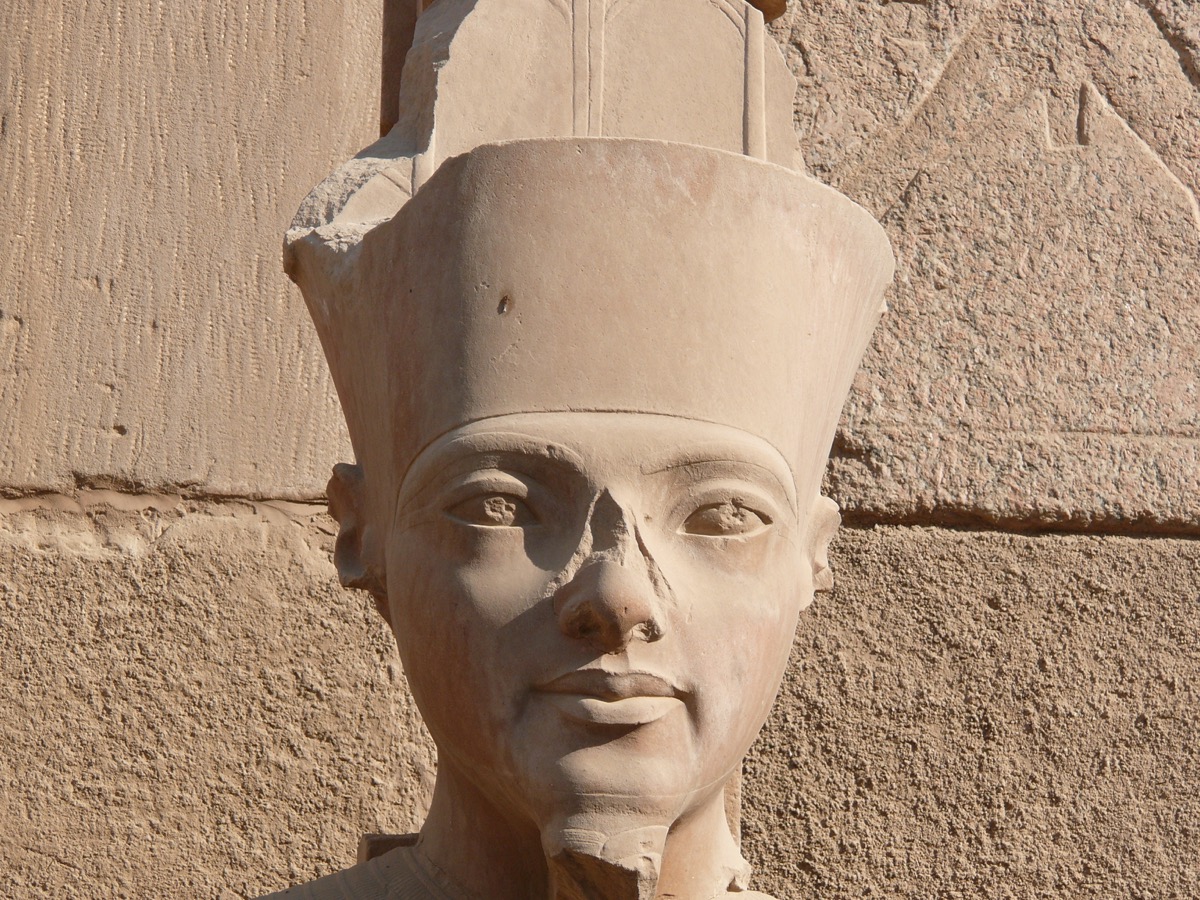
𓁩 Amun takes his place. The Amenemhats of Dynasty 12 mark the transition. By Dynasty 18 Amun dominates: Amenhotep I, II, III, Tutankhamun. By Dynasty 20, Papyrus Harris records that Amun's estate at Thebes controlled 86,486 workers, 421,362 head of livestock, and 2,393 square kilometers of farmland. Amun had become an economic empire operating under the cover of a god.
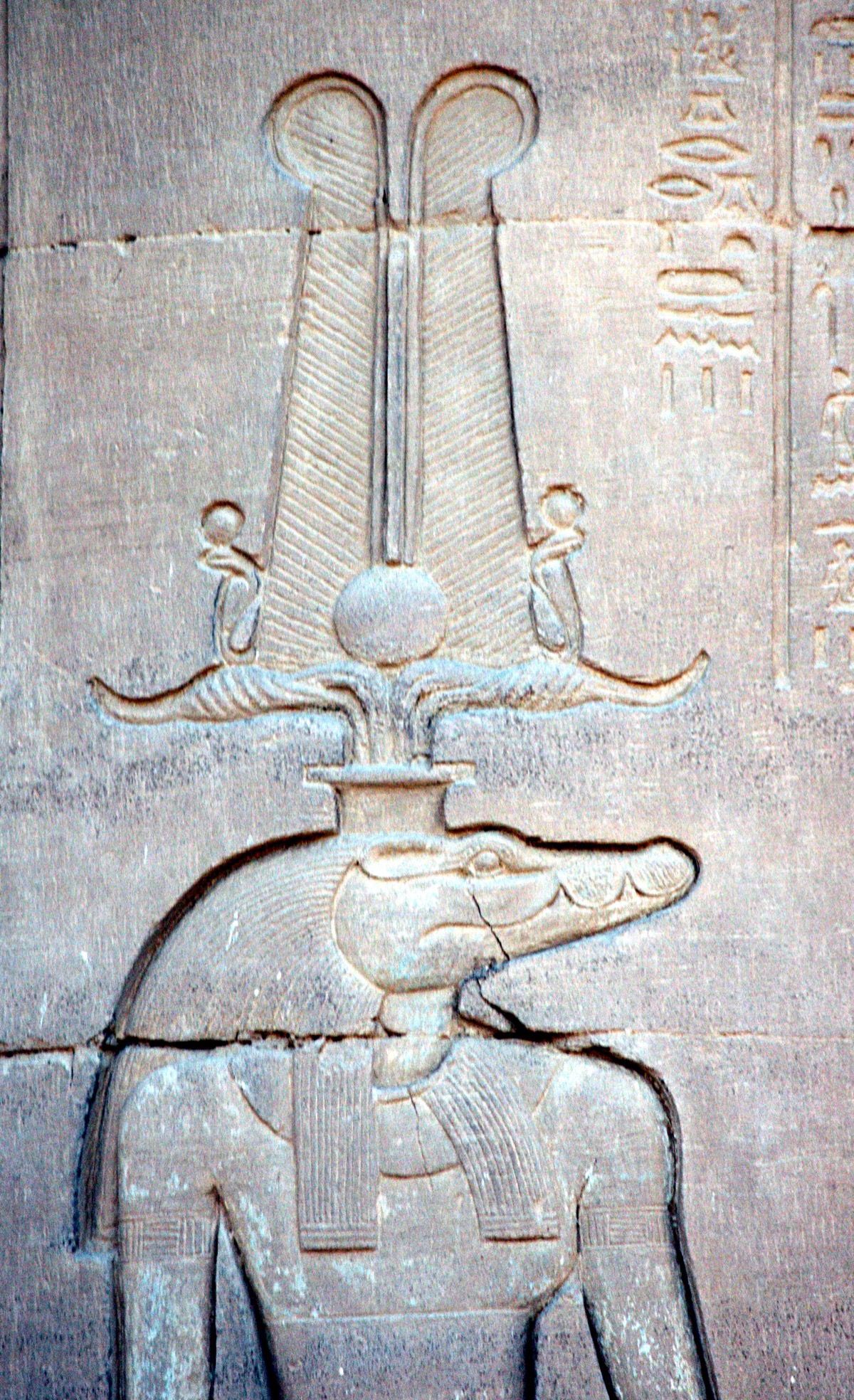
Between them, 𓆊 Sobek makes a cameo. The crocodile god clusters in Dynasties 12-13 and 16-17, precisely when the Fayum, his cult center, was politically powerful. Amenemhat III massively developed the Fayum's irrigation canals, and Dynasty 13 produced at least seven kings named Sobekhotep ("Sobek is pleased"). Follow the infrastructure money and you find the god.
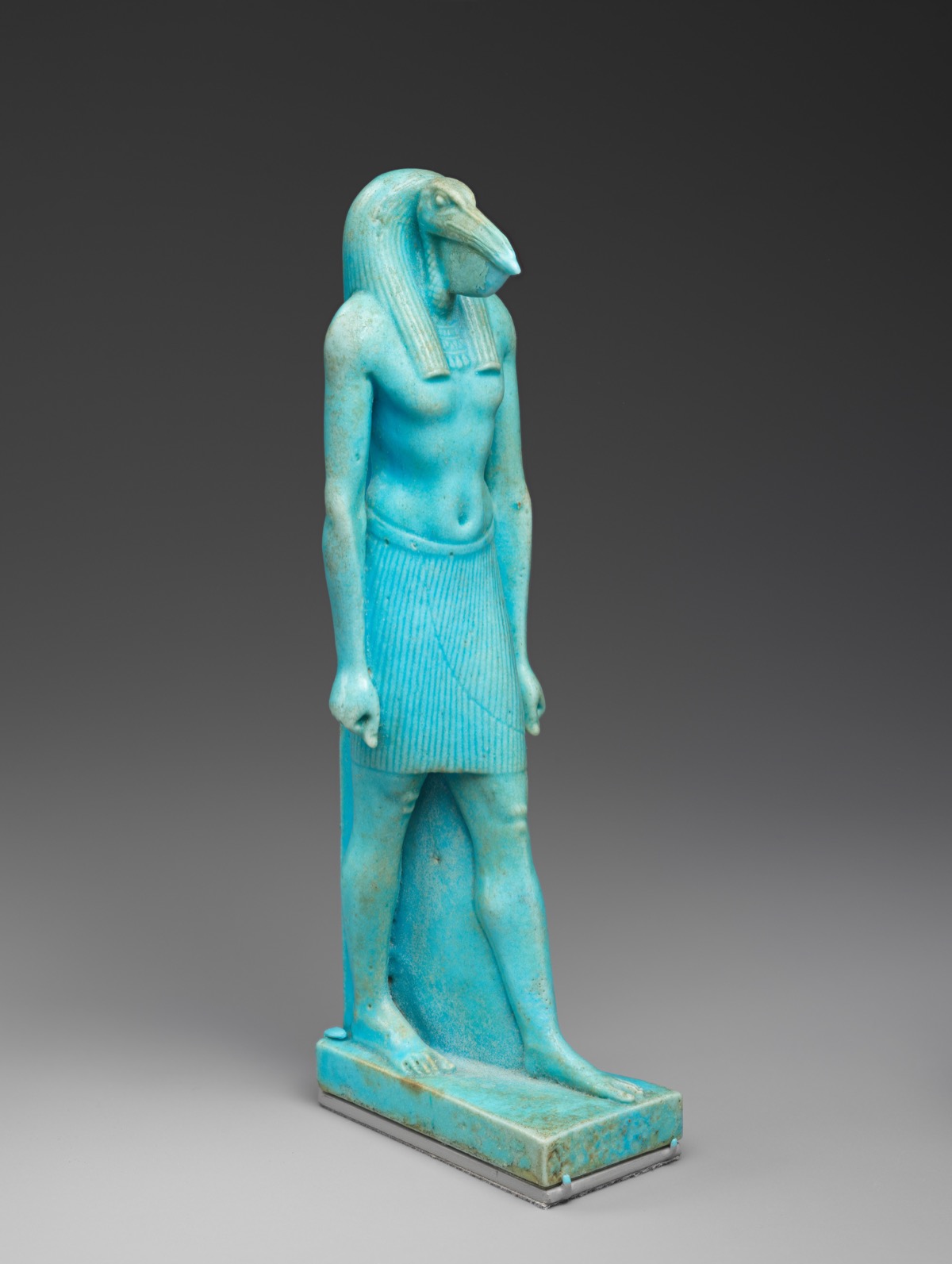
𓅝 Thoth is confined almost entirely to Dynasty 18's Thutmosid line: Thutmose I through IV, "born of Thoth." A single family's devotion, not a broad cultural trend. If the Thutmosids had not happened to produce some of Egypt's greatest pharaohs, Thoth would barely register.
𓃩 Set is the strangest case. Seth-Peribsen of Dynasty 2 uniquely replaced Horus with Seth on his serekh. Then Set disappears from royal names for over a millennium, only to resurface with the Ramessides (Seti I, Seti II, Setnakhte), who came from the eastern Delta where Set was the local god. They rehabilitated a deity that was otherwise being demonized. After the Ramessides fell, the rehabilitation was reversed. Both the names and the temples were erased.
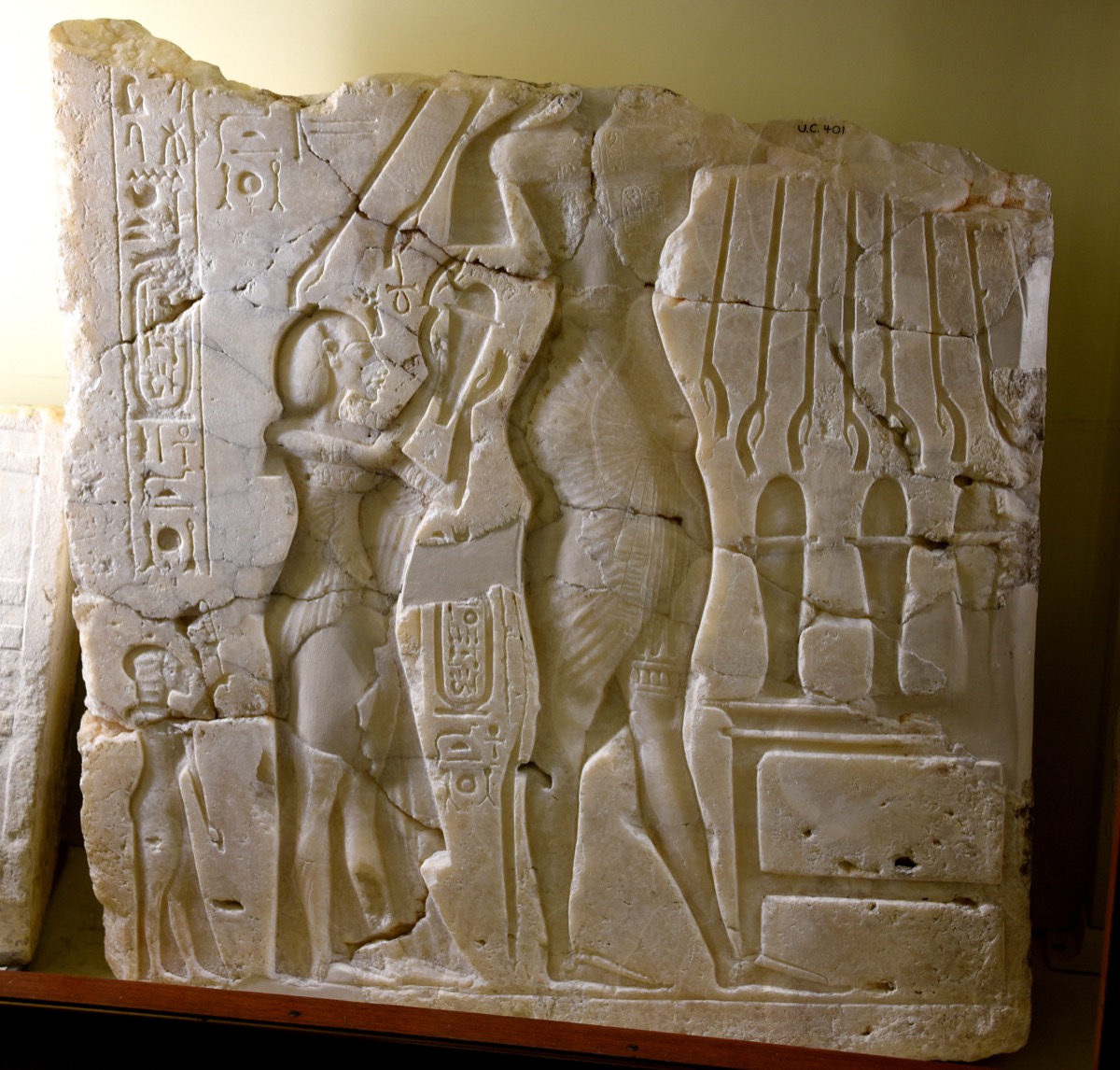
And 𓇯 Aten is the shortest spike in the entire dataset, and the most informative. Akhenaten imposed the name, Neferneferuaten carried it, Tutankhaten bore it briefly before reverting to Tutankhamun. One reign's worth of theological revolution, then total reversion. Maximal naming alignment, maximal temple investment, zero persistence after regime change. Aten is the closest thing in the ancient world to a natural experiment in top-down institutional reform, and the result is unambiguous: state cults are not self-sustaining without broader institutional buy-in.
Ra: Too Big to Fail
Ra requires separate treatment. From Dynasty 4 onward, nearly every pharaoh's prenomen (throne name) ends in "-re." This is formulaic. But Ra in the birth name is a deliberate choice, and the pattern is revealing.
- Dynasties 4-6: Ra in birth names climbs steadily (Djedefre, Khafre, Menkaure, Sahure), coinciding with the height of the solar cult at Heliopolis, when Dynasty 5 built at least six dedicated sun temples.
- Dynasty 8: Peaks at ~88%, but these are First Intermediate Period "Neferkare" clones, all claiming descent from Pepi II. Legitimation, not devotion.
- Dynasty 18: Ra drops out of birth names almost entirely. The Thutmosids and Amenhoteps chose Thoth and Amun. Thebes had won.
- Dynasty 20: Ra floods back via the Ramesses line ("Ra bore him"), 10 of 11 pharaohs carrying the name.
This reveals a distinction within Ra himself. The prenomen "-re" is constitutional: baseline legitimacy, required of every pharaoh regardless of faction. The nomen Ra is partisan: a deliberate signal of Heliopolitan/Delta allegiance that competes with Amun, Thoth, and the other state-cult gods. When Thebes is ascendant, birth names go Montu, Amun, Thoth. When the Delta or Memphis is ascendant, Ra comes back. The prenomen never wavers because no one could afford to drop Ra entirely. But the nomen tells you who was actually winning.
Does the Signal Hold?
Names are suggestive. But if a god appears in pharaonic names, pharaohs should also be building temples to that god. I scored temple construction activity for each god in each dynasty (0-3 scale) based on archaeological evidence.
The correlation is real but imperfect. Amun names and Amun temples peak together. Montu's cult centers (Armant, Tod, Medamud) peak in Dynasty 11 alongside Montu names. Aten temples appear and disappear with Aten names. But Ptah and Khnum receive continuous temple investment despite almost never appearing in pharaonic names. This is the first hint that something structural is going on.
To test this formally, I normalized both variables within each dynasty (each god's share of naming versus share of temple building), controlled for periods of general collapse, and excluded the gods that seem to get funded regardless.1
R² = 0.34, r = 0.58, p < 0.0001. One-third explanatory power is high for cultural-historical data across three millennia. And the remaining two-thirds is not a weakness of the model; it is exactly what you would predict. Pharaohs routinely built for gods other than their namesake. Thutmose III has a Thoth birth name but poured his war tribute into Amun's treasury at Karnak. The Ramessides have Ra names but built the Great Hypostyle Hall for Amun. Names signal allegiance; building programs signal budget allocation. They correlate, but they measure different things, and the imperfect overlap is itself evidence that naming was political rather than merely devotional.
Who Had Real Job Security
This is where it gets interesting. Several important deities never appear in pharaonic names despite being culturally central: Osiris, Anubis, Bastet, Wadjet, Sekhmet, Khonsu. No pharaoh was named "Osiris-hotep" or "Anubis-mose." And yet their temples received continuous investment across virtually every dynasty.
Ptah had one of Egypt's largest temples at Memphis, continuously expanded for over two thousand years. Khnum's temple at Elephantine was maintained for millennia. Osiris at Abydos received royal attention from Dynasty 1 through the Ptolemies. These gods never went through the boom-and-bust cycle that Montu, Aten, and Set experienced. They just kept getting funded.
The Gini coefficient quantifies this. State cult gods have high Gini scores: their temple building is concentrated in specific eras, spiking when they are politically ascendant and vanishing when they are not. Infrastructure gods have low Gini scores: their building is distributed evenly across periods. Osiris has a Gini of 0.49. Aten has a Gini of 0.97. One god's temples got built for three thousand years. The other's lasted a single reign.
Egyptian religion operated through two distinct mechanisms of persistence. The politically mediated gods were volatile, shifting with every change of dynasty and regional power center. Amun rose when Thebes rose. Set rose when the Delta Ramessides took power. Aten rose when one pharaoh decided to start a revolution. These gods were instruments of state power, and their fortunes tracked the fortunes of the factions that championed them.
The socially indispensable gods persisted through a different logic entirely. Ptah kept getting temples because Memphis needed its craftsmen. Khnum kept getting temples because the Nile needed to flood. Osiris kept getting temples because the dead kept needing to be buried. Their utility was regime-independent, and so was their funding.
The boundary between these two mechanisms is not perfectly clean. Osiris, for instance, was genuinely indispensable (the dead always needed burying), but Abydos was not a passive site. Middle Kingdom rulers invested aggressively there to legitimize their rule, which looks more like state behavior routed through funerary ideology than pure infrastructure. And Anubis is tied to death but does not show quite the same steady pattern as Osiris. The distinction is not between two hermetically sealed categories but between two tendencies: gods whose persistence was driven primarily by political sponsorship, and gods whose persistence was driven primarily by functional necessity. Most gods leaned clearly one way or the other, but a few sat in between.
The Saite dynasty (Dynasty 26) makes this vivid. Based at Sais, devoted to Neith, they built Neith temples extensively, yet not a single Saite pharaoh has a Neith name. The last royal Neith name was Merneith in Dynasty 1, over 2,000 years earlier. Neith was important to the Saites. She was not, in the naming sense, political.
What the Bifurcation Means
Each pattern in the data maps to a distinct dynamic once you accept the two-layer framing.
The Montu-to-Amun transition is the replacement of a regional war god with a scalable state cult. Montu worked for a Theban warlord reunifying Egypt by force. Amun worked for a centralized bureaucratic empire that needed a god capable of absorbing other cults and accumulating institutional wealth.
The Ra fluctuations track the regional power balance between Heliopolis/Memphis and Thebes, expressed as theology.
The Aten spike is a forced attempt to replace the state cult from above. It lasted one reign, and the reversion was total. This suggests the state-cult layer, while volatile, had its own institutional inertia that resisted even pharaonic authority.
The Set cluster is regionalism. The Ramessides promoted their hometown god, and when the Ramessides fell, every trace of that promotion was erased. Set's fate is the mirror image of Amun's rise: proof that the state-cult layer was genuinely political and not merely traditional.
And the infrastructure gods are the most interesting finding. They suggest that beneath the theological volatility of the state-cult layer, Egyptian religion had a stable functional core that operated on a completely different logic. Nobody named a dynasty after Ptah, but everybody funded his temple, because Memphis needed its craftsmen whether the pharaoh worshipped Amun or Ra or Aten or nobody at all.
Three thousand years of divine patronage, compressed into a regression. R² = 0.34. The signal is real, if noisy, which is about what you'd expect from tracking political theology through royal naming data.2
Appendix: Raw Data
Table A: Theophoric Names (pharaoh-by-pharaoh)
| Dynasty | Dates (BC) | Pharaoh | God in Nomen | Meaning |
|---|---|---|---|---|
| D1 | 3100-2890 | Hor-Aha | Horus | "Horus the fighter" |
| D1 | 3100-2890 | Merneith | Neith | "Beloved of Neith" |
| D2 | 2890-2686 | Raneb/Nebra | Ra | "Ra is lord" (earliest Ra theophoric royal name) |
| D2 | 2890-2686 | Seth-Peribsen | Set | Replaced Horus with Seth on serekh |
| D4 | 2613-2494 | Khufu | Khnum | "Khnum protects me" (full name Khnum-Khufu) |
| D4 | 2613-2494 | Djedefre | Ra | "Enduring like Ra" |
| D4 | 2613-2494 | Khafre | Ra | "Appearing like Ra" |
| D4 | 2613-2494 | Menkaure | Ra | "Eternal like the kas of Ra" |
| D5 | 2494-2345 | Sahure | Ra | "He who is close to Ra" |
| D5 | 2494-2345 | Neferirkare | Ra | "Beautiful is the ka of Ra" |
| D5 | 2494-2345 | Neferefre | Ra | Contains Ra |
| D5 | 2494-2345 | Shepseskare | Ra | Contains Ra |
| D5 | 2494-2345 | Nyuserre | Ra | "Possessed of Ra's power" |
| D5 | 2494-2345 | Djedkare | Ra | "Stable is the ka of Ra" |
| D5 | 2494-2345 | Menkauhor | Horus | Nomen contains Hor |
| D6 | 2345-2181 | Userkare | Ra | "Powerful is the ka of Ra" |
| D6 | 2345-2181 | Pepi I Meryre | Ra | "Beloved of Ra" |
| D6 | 2345-2181 | Pepi II Neferkare | Ra | "Beautiful is the ka of Ra" |
| D6 | 2345-2181 | Merenre I | Ra | "Beloved of Ra" |
| D8 | 2181-2160 | Neferkare II-VIII (15 kings) | Ra | Variants of "Beautiful is the ka of Ra" |
| D8 | 2181-2160 | Merenhor, Neferkahor, Neferkauhor | Horus | Contains Hor |
| D8 | 2181-2160 | Neferkamin, Neferkamin Anu | Min | Possibly contains Min |
| D9 | 2160-2130 | Meryibre Khety I, Nebkaure Khety II, Merykare | Ra | Prenomen/nomen Ra compounds |
| D9 | 2160-2130 | Setut | Set | Possible Set connection (uncertain) |
| D10 | 2130-2040 | Meryhathor | Hathor | "Beloved of Hathor" |
| D10 | 2130-2040 | Neferkare VIII, Wahkare Khety III, Merykare | Ra | Ra compounds |
| D11 | 2134-1991 | Mentuhotep I | Montu | "Montu is pleased" |
| D11 | 2134-1991 | Mentuhotep II | Montu | "Montu is pleased" (reunifier of Egypt) |
| D11 | 2134-1991 | Mentuhotep III | Montu | "Montu is pleased" |
| D11 | 2134-1991 | Mentuhotep IV | Montu | "Montu is pleased" |
| D12 | 1991-1802 | Amenemhat I | Amun | "Amun is at the head" |
| D12 | 1991-1802 | Amenemhat II | Amun | "Amun is at the head" |
| D12 | 1991-1802 | Amenemhat III | Amun | "Amun is at the head" |
| D12 | 1991-1802 | Amenemhat IV | Amun | "Amun is at the head" |
| D12 | 1991-1802 | Sobekneferu | Sobek | "Beautiful of Sobek" |
| D13 | 1802-1649 | Sobekhotep I | Sobek | "Sobek is pleased" |
| D13 | 1802-1649 | Sobekhotep II | Sobek | "Sobek is pleased" |
| D13 | 1802-1649 | Sobekhotep III | Sobek | "Sobek is pleased" |
| D13 | 1802-1649 | Sobekhotep IV | Sobek | "Sobek is pleased" |
| D13 | 1802-1649 | Amenemhat V, Ameny Qemau, Kay Amenemhat VII | Amun | Amun compounds |
| D13 | 1802-1649 | Awybre Hor | Horus | Contains Hor |
| D16 | 1649-1582 | Djehuty | Thoth | "Djehuty" = Thoth |
| D16 | 1649-1582 | Sobekhotep VIII | Sobek | "Sobek is pleased" |
| D16 | 1649-1582 | Mentuhotepi, Montemsaf, Mentuhotep VI | Montu | Montu compounds |
| D17 | 1580-1550 | Sobekemsaf I | Sobek | "Sobek is his protection" |
| D17 | 1580-1550 | Sobekemsaf II | Sobek | "Sobek is his protection" |
| D17 | 1580-1550 | Senakhtenre Ahmose | Iah | "Iah is born" (moon god) |
| D17 | 1580-1550 | Rahotep | Ra | "Ra is pleased" |
| D18 | 1550-1292 | Amenhotep I | Amun | "Amun is pleased" |
| D18 | 1550-1292 | Thutmose I | Thoth | "Born of Thoth" |
| D18 | 1550-1292 | Thutmose II | Thoth | "Born of Thoth" |
| D18 | 1550-1292 | Hatshepsut | Amun | Extended name Khnumt-Amun |
| D18 | 1550-1292 | Thutmose III | Thoth | "Born of Thoth" |
| D18 | 1550-1292 | Amenhotep II | Amun | "Amun is pleased" |
| D18 | 1550-1292 | Thutmose IV | Thoth | "Born of Thoth" |
| D18 | 1550-1292 | Amenhotep III | Amun | "Amun is pleased" |
| D18 | 1550-1292 | Akhenaten | Aten | "Effective for the Aten" (changed from Amenhotep IV) |
| D18 | 1550-1292 | Neferneferuaten | Aten | Contains Aten |
| D18 | 1550-1292 | Tutankhamun | Amun | "Living image of Amun" (changed from Tutankhaten) |
| D18 | 1550-1292 | Horemheb | Horus | "Horus is in jubilee" |
| D18 | 1550-1292 | Ahmose I | Iah | "Iah is born" (moon god) |
| D19 | 1292-1189 | Ramesses I | Ra | "Ra bore him" |
| D19 | 1292-1189 | Seti I | Set | "Man of Set" |
| D19 | 1292-1189 | Ramesses II | Ra | "Ra bore him" |
| D19 | 1292-1189 | Merneptah | Ptah | "Beloved of Ptah" |
| D19 | 1292-1189 | Amenmesse | Amun | "Born of Amun" |
| D19 | 1292-1189 | Seti II | Set | "Man of Set" |
| D19 | 1292-1189 | Twosret | Amun | Extended: "beloved of Amun" |
| D20 | 1189-1077 | Setnakhte | Set | "Set is victorious" |
| D20 | 1189-1077 | Ramesses III-XI (10 kings) | Ra | "Ra bore him" variants |
| D20 | 1189-1077 | Ramesses III-VI, VIII, X (7 kings) | Amun | Amun in extended names |
| D20 | 1189-1077 | Ramesses VIII | Set | Alt name contains Seth |
| D20 | 1189-1077 | Ramesses XI | Ptah | Prenomen contains Ptah |
| D21 | 1077-943 | Amenemnisu, Amenemope, Siamun | Amun | Amun compounds |
| D22 | 943-716 | Osorkon II | Amun | Prenomen Setepen-Amun |
| D23 | 880-720 | Harsiese A | Horus, Isis | "Horus son of Isis" |
| D23 | 880-720 | Rudamun | Amun | Contains Amun |
| D23 | 880-720 | Pedubast I | Amun | Prenomen Setepen-Amun |
| D24 | 732-720 | Bakenranef | Ra | "Servant of his ka, Ra" |
| D25 | 747-656 | Tantamani | Amun | Possible Amun element |
| D26 | 664-525 | Amasis II | Khnum | Prenomen Khnem-ib-re |
| D29 | 398-380 | Psammuthes | Ptah | Prenomen contains Ptah |
| D29 | 398-380 | Hakor | Khnum | Prenomen Khnum-maat-re |
| D30 | 380-343 | Teos/Djedhor | Horus | "Horus endures" |
| D30 | 380-343 | Nectanebo II | Horus | Prenomen contains Inhur |
Table B: Temple Building Evidence
State Cult Gods
| Dynasty | God | Score | Sites/Temples | Builder(s) |
|---|---|---|---|---|
| D2 | Set | 1 | Naqada/Ombos cult site | Seth-Peribsen |
| D3 | Ra | 1 | Heliopolis (earliest royal construction ref) | Djoser |
| D5 | Ra | 3 | Six sun temples at Abu Ghurob/Abusir: Nekhen-Re, Sekhet-Re, Set-ib-Re, Shesepu-ib-Re, Akhet-Re, plus one unfinished | Userkaf, Sahure, Neferirkare, Nyuserre, Menkauhor, Raneferef |
| D11 | Montu | 3 | Armant, Tod, Medamud (Montu cult centers) | Mentuhotep II, III |
| D11 | Amun | 1 | Early Amun shrine at Karnak (debated) | Intef II (possibly) |
| D12 | Amun | 2 | White Chapel (Chapelle Blanche) at Karnak | Senusret I |
| D12 | Montu | 2 | Temple of Montu at Tod; Tod Treasure | Senusret I |
| D12 | Sobek | 3 | Shedet/Crocodilopolis, Medinet Madi (Sobek + Renenutet), Fayum irrigation | Amenemhat III |
| D12 | Ra | 2 | Obelisk at Heliopolis (oldest standing) | Senusret I |
| D13 | Amun | 1 | Karnak maintenance | Sobekhotep IV |
| D13 | Sobek | 2 | Continued Fayum temples | Sobekhotep III, IV |
| D15 | Set | 2 | Set/Ba'al temple at Avaris (Hyksos) | Apepi/Apophis |
| D17 | Amun | 1 | Karnak maintenance during Hyksos conflict | D17 Theban kings |
| D18 | Amun | 3 | Red Chapel, obelisks, Deir el-Bahari (Hatshepsut); Akhmenu, 6th/7th Pylons (Thutmose III); 3rd Pylon, Luxor Temple (Amenhotep III); Restoration Stela (Tutankhamun); 2nd/9th/10th Pylons (Horemheb) | Hatshepsut, Thutmose III, Amenhotep III, Tutankhamun, Horemheb |
| D18 | Thoth | 2 | Hermopolis: colossal baboon statues, temple expansion | Amenhotep III, Thutmose III |
| D18 | Aten | 3 | Gempaaten at East Karnak; Great and Small Aten Temples at Amarna; temples at Sesebi and Kawa (Nubia) | Akhenaten |
| D18 | Montu | 1 | Medamud maintenance | Thutmose III |
| D18 | Sobek | 1 | Sobek temple at Sumenu | Thutmose III |
| D18 | Ra | 2 | Heliopolis obelisks and expansion | Thutmose III |
| D19 | Amun | 3 | Great Hypostyle Hall at Karnak (begun); Ramesseum; Luxor Temple 1st Pylon and obelisks | Seti I, Ramesses II |
| D19 | Set | 3 | Pi-Ramesses Set temple district; 400-Year Stela | Ramesses II |
| D19 | Ra | 2 | Heliopolis obelisks | Ramesses II |
| D19 | Thoth | 1 | Hermopolis reuse/building | Ramesses II |
| D20 | Amun | 3 | Medinet Habu (mortuary temple); Karnak bark shrine | Ramesses III |
| D20 | Set | 1 | Papyrus Harris donations to Set temple | Ramesses III |
| D20 | Ra | 1 | Papyrus Harris donations to Ra at Heliopolis | Ramesses III |
| D21-23 | Amun | 1 each | Karnak forecourt (Shoshenq I); Bubastite Portal; High Priests of Amun maintenance | Shoshenq I, High Priests |
| D25 | Amun | 1 | Karnak kiosk and colonnade | Taharqa |
| D30 | Amun | 2 | First Pylon of Karnak (unfinished); avenue of sphinxes | Nectanebo I |
| D30 | Thoth | 1 | Hermopolis building | Nectanebo I |
| Ptol | Amun | 2 | Karnak and Luxor maintenance | Ptolemies I-XII |
| Ptol | Sobek | 2 | Temple of Kom Ombo (Sobek + Haroeris) | Ptolemy VI-XII |
| Ptol | Montu | 1 | Medamud gateway rebuilding | Ptolemy III+ |
| Ptol | Thoth | 1 | Hermopolis Thoth temple rebuilding | Ptolemy III |
Infrastructure Gods
| Dynasty | God | Score | Sites/Temples | Builder(s) |
|---|---|---|---|---|
| D1 | Horus | 1 | Hierakonpolis (Nekhen), predynastic Horus cult center | Early kings |
| D1 | Osiris | 1 | Early Abydos cult installations; Umm el-Qa'ab royal necropolis | D1 kings |
| D1 | Anubis | 1 | Mortuary shrines at Abydos and Saqqara | D1 kings |
| D1 | Wadjet | 1 | Buto (Pe/Dep), shrine of the cobra goddess of Lower Egypt | D1 kings |
| D1 | Neith | 1 | Sais, early shrine of the goddess of war and weaving | D1 kings |
| D2 | Osiris | 1 | Abydos cult continued | D2 kings |
| D2 | Anubis | 1 | Mortuary context at Saqqara | D2 kings |
| D2 | Wadjet | 1 | Buto shrine maintenance | D2 kings |
| D3 | Ptah | 1 | Temple of Ptah at Memphis, early construction | Djoser |
| D5 | Osiris | 1 | Pyramid Texts reference Osiris cult at Abydos | Unas |
| D5 | Anubis | 1 | Anubis shrines in mortuary complexes at Saqqara | D5 kings |
| D6 | Ptah | 2 | Temple of Ptah at Memphis expansion | Pepi I, Pepi II |
| D6 | Osiris | 1 | Abydos Osiris temple expansion; Pyramid Texts proliferate | Pepi I, Pepi II |
| D6 | Anubis | 1 | Mortuary chapels with Anubis dedications | Pepi I |
| D6 | Wadjet | 1 | Buto shrine maintenance | D6 kings |
| D11 | Osiris | 1 | Abydos cult maintenance under Theban reunification | Mentuhotep II |
| D11 | Anubis | 1 | Mortuary context at Deir el-Bahari | Mentuhotep II |
| D12 | Ptah | 1 | Memphis Ptah temple maintenance | Amenemhat I |
| D12 | Khnum | 1 | Elephantine temple rebuilding | Senusret I |
| D12 | Osiris | 1 | Abydos expansion, cenotaphs | Senusret III |
| D12 | Anubis | 1 | Mortuary shrines at Abydos | D12 kings |
| D12 | Wadjet | 1 | Buto maintenance | D12 kings |
| D13 | Osiris | 1 | Abydos continued | Neferhotep I |
| D13 | Anubis | 1 | Mortuary context continued | D13 kings |
| D18 | Horus | 1 | Horus imagery at Deir el-Bahari | Hatshepsut |
| D18 | Ptah | 2 | Ptah temple at Memphis expansion; Ptah chapel at Karnak | Thutmose III, Amenhotep III |
| D18 | Khnum | 2 | Elephantine temple expansion | Thutmose III, Amenhotep III |
| D18 | Osiris | 2 | Abydos chapels expanded | Thutmose III, Amenhotep III |
| D18 | Anubis | 1 | Anubis chapel at Deir el-Bahari (Hatshepsut) | Hatshepsut |
| D18 | Sekhmet | 2 | Hundreds of Sekhmet statues at Mut precinct, Karnak | Amenhotep III |
| D18 | Wadjet | 1 | Wadjet Hall at Karnak (Thutmose III) | Thutmose III |
| D18 | Khonsu | 1 | Early Khonsu shrine within Karnak Amun precinct | D18 kings |
| D19 | Ptah | 3 | Ptah temple at Memphis massive expansion; fallen colossus | Ramesses II, Merneptah |
| D19 | Khnum | 1 | Small temple at Elephantine | Ramesses II |
| D19 | Osiris | 3 | Seti I's Abydos temple (one of finest in Egypt); Ramesses II temple at Abydos | Seti I, Ramesses II |
| D19 | Anubis | 1 | Anubis chapels within Abydos temples | Seti I |
| D19 | Bastet | 1 | Bubastis (Tell Basta) early building | D19 kings |
| D19 | Sekhmet | 1 | Sekhmet chapel maintenance at Karnak | D19 kings |
| D19 | Wadjet | 1 | Buto/Delta shrine maintenance | D19 kings |
| D19 | Khonsu | 1 | Khonsu temple at Karnak, early phases | D19 kings |
| D20 | Horus | 1 | Small Horus temple at Medinet Habu | Ramesses III |
| D20 | Ptah | 1 | Memphis Ptah temple maintenance | Ramesses III |
| D20 | Osiris | 2 | Abydos maintenance; Osiris chapels at Medinet Habu | Ramesses III |
| D20 | Anubis | 1 | Mortuary chapels continued | D20 kings |
| D20 | Bastet | 1 | Bubastis maintenance | D20 kings |
| D20 | Sekhmet | 1 | Karnak Sekhmet statues maintained | D20 kings |
| D20 | Wadjet | 1 | Delta shrine maintenance | D20 kings |
| D20 | Khonsu | 2 | Temple of Khonsu at Karnak, major construction | Ramesses III (begun), Ramesses IV |
| D21 | Osiris | 1 | Abydos maintenance | High Priests |
| D21 | Anubis | 1 | Mortuary context | D21 kings |
| D21 | Khonsu | 1 | Khonsu temple at Karnak continued | Herihor, Pinedjem I |
| D22 | Ptah | 1 | Memphis building activity | Shoshenq I |
| D22 | Osiris | 1 | Abydos maintenance | D22 kings |
| D22 | Bastet | 2 | Major Bastet temple at Bubastis, festival hall | Osorkon I, Osorkon II |
| D22 | Khonsu | 1 | Khonsu temple decoration continued | D22 kings |
| D23 | Osiris | 1 | Abydos maintenance | D23 kings |
| D23 | Bastet | 1 | Bubastis maintenance | D23 kings |
| D25 | Osiris | 1 | Abydos maintenance | Nubian kings |
| D26 | Ptah | 1 | Memphis palace/temple area | Apries |
| D26 | Khnum | 1 | Elephantine maintenance | Amasis II |
| D26 | Osiris | 1 | Abydos continued | D26 kings |
| D26 | Neith | 3 | Major Neith temple construction at Sais (now destroyed) | Amasis II, Psamtik I |
| D26 | Anubis | 1 | Mortuary cult maintenance | D26 kings |
| D26 | Bastet | 1 | Bubastis maintenance | D26 kings |
| D26 | Wadjet | 1 | Buto maintenance | D26 kings |
| D29 | Khnum | 1 | Elephantine Khnum temple | Hakor |
| D29 | Osiris | 1 | Abydos maintenance | D29 kings |
| D30 | Horus | 1 | Pre-Ptolemaic Edfu foundations | Nectanebo II |
| D30 | Khnum | 2 | Khnum temple at Elephantine rebuilt (current ruins) | Nectanebo II |
| D30 | Osiris | 1 | Abydos maintenance | D30 kings |
| Ptol | Horus | 3 | Temple of Horus at Edfu (237-57 BC, one of best preserved) | Ptolemy III through XII |
| Ptol | Ptah | 1 | Memphis maintenance | Various Ptolemies |
| Ptol | Khnum | 1 | Esna temple (hypostyle hall completed under Romans) | Ptolemy VI-VIII |
| Ptol | Osiris | 2 | Osiris chapels at Dendera; Abydos continued | Various Ptolemies |
| Ptol | Anubis | 1 | Anubis representations at Kom Ombo and other temples | Various Ptolemies |
| Ptol | Bastet | 1 | Bubastis maintenance; cat cult expansion | Late Ptolemies |
| Ptol | Sekhmet | 1 | Sekhmet chapel at Karnak maintained | Various Ptolemies |
| Ptol | Wadjet | 1 | Buto shrine | Various Ptolemies |
| Ptol | Khonsu | 1 | Khonsu temple at Karnak completed | Various Ptolemies |
You might also like:
- The Memory of Rome in Coptic Christianity · How Egyptian Christians reconstituted the Roman Empire as a living spiritual reality.
- The Secret Religion · A tour of esoteric traditions hidden in plain sight across millennia, from Gnostics to Druze.
- The Legend of Odisho · What an Assyrian folk hero's tale reveals about honor cultures in the ancient Near East.
Footnotes
-
The normalization computes each god's share of that dynasty's total theophoric names (x-axis) versus that dynasty's total temple building (y-axis). Dynasties with zero activity on either axis are dropped. Infrastructure gods (Ptah, Khnum, Neith) are excluded from the regression because they receive temples regardless of naming fashion. ↩
-
Data compiled from standard king lists (Turin Canon, Abydos, Manetho via Africanus/Eusebius), cross-referenced with Dodson & Hilton's The Complete Royal Families of Ancient Egypt and Shaw's The Oxford History of Ancient Egypt. Temple building scores based on archaeological evidence catalogued in Wilkinson's The Complete Temples of Ancient Egypt. Statistical analysis performed in-browser using Plotly.js with OLS regression. All charts are interactive; hover for details. All images are public domain via Wikimedia Commons (CC BY-SA) or the Metropolitan Museum of Art Open Access program. ↩