The Memory of Rome in Coptic Christianity
Rome is eternal. It is marble, eagles, and glory. In the Western imagination, the Roman Empire typically appears in classical form: Julius Caesar, Augustus, the Colosseum. We are endlessly enchanted by the imperial grandeur of legionnaires, senators, and emperors. Much of the Western tradition draws on that high classical sensibility: our law, our philosophy, our aesthetic ideals. To us, Rome is civilization.
But for Copts, the Christians of Egypt, Rome is something else entirely. Rome is incense and candlelight. It is the world of the martyrs, the cradle of Coptic identity. Painted faces, haloed, staring back from the walls of the church. It is the stage upon which salvation history unfolded.
The same empire lives very different afterlives. In the West, Rome becomes law and language. In Coptic Egypt, it becomes martyrdom and miracle. That memory, in both cases, finds expression in cinema. Just as we have Gladiator or HBO’s Rome, the Copts have developed their own devotional film tradition set in the Roman period.
Copts: A Brief Introduction
Egypt is home to roughly ten million Christians known as Copts. They are the direct descendants of the ancient Egyptians, and though they now speak Arabic, they still pray in Coptic, the final form of the ancient Egyptian language. Written in Greek letters but carrying the grammar and vocabulary of ancient Egyptian, Coptic is not a foreign import but the last breath of Pharaonic speech.
In ancient Egypt, the hieroglyph ☥ meant “life” and was pronounced ankh. In Coptic it survives as onkh. The sound never entirely vanished. In church hymns, Christ is invoked as Pi Onkh: "The Life.”
When nineteenth-century scholars such as Jean-François Champollion deciphered hieroglyphs, it was Coptic that unlocked their meaning. The ancient language had not died completely; it had survived in the liturgy of the church.

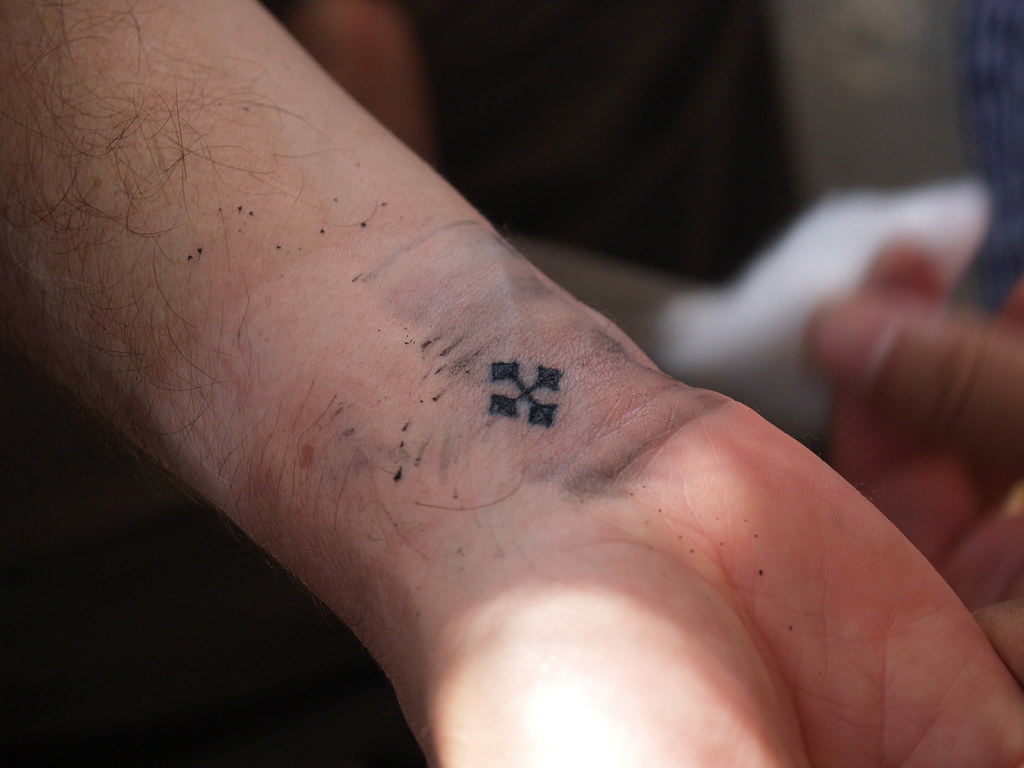
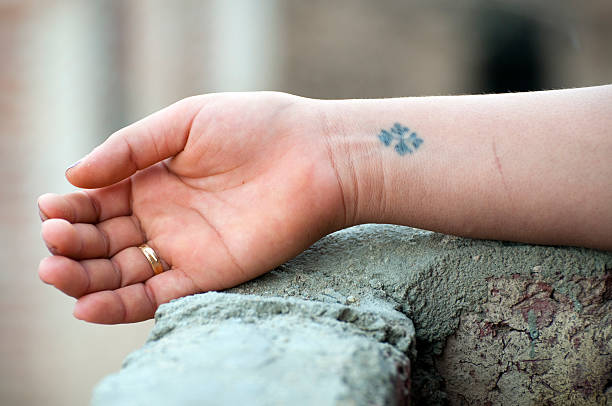
Traditional Coptic cross tattoos, worn on the wrist, serve as a lifelong declaration of religious affiliation.
On the one hand, Coptic Christianity sounds familiar to a Western audience: the Nicene Creed, sacraments, priests. On the other hand, the Coptic experience, what it's like, is wholly different. There is no point in being a Christian in Egypt unless you plan to mean it.
As a Copt, you will celebrate special holidays, have dietary restrictions, and will probably be identifiable as a Christian from your name: Boutros, Boulos, Jurjius... these are the Arabic forms of Peter, Paul, and George. There is a good chance your parents will tattoo a cross onto your wrist, so that even if you convert to Islam one day, your Christian roots can never be erased. In this regard, Coptic Christianity defines itself through commitment and intensity.
Rome as a Beginning
For the West, Rome is the climax of ancient history, ultimately collapsing into the medieval period. But for Copts, Rome is the beginning. Their calendar itself begins in 284 AD, the accession of Diocletian and the Era of the Martyrs. By that reckoning, we now live in the year 1742 Anno Martyrum.
It was in these centuries that Egypt’s ancient religious world gave way to Christianity, that persecution and martyrdom reshaped communal identity, and that something recognizably “Coptic” emerged. The transformation was decisive. Egyptian monks such as Anthony and Pachomius pioneered Christian monasticism. Theologians like Athanasius helped define orthodoxy. Copts began writing in their own language rather than exclusively in Greek.
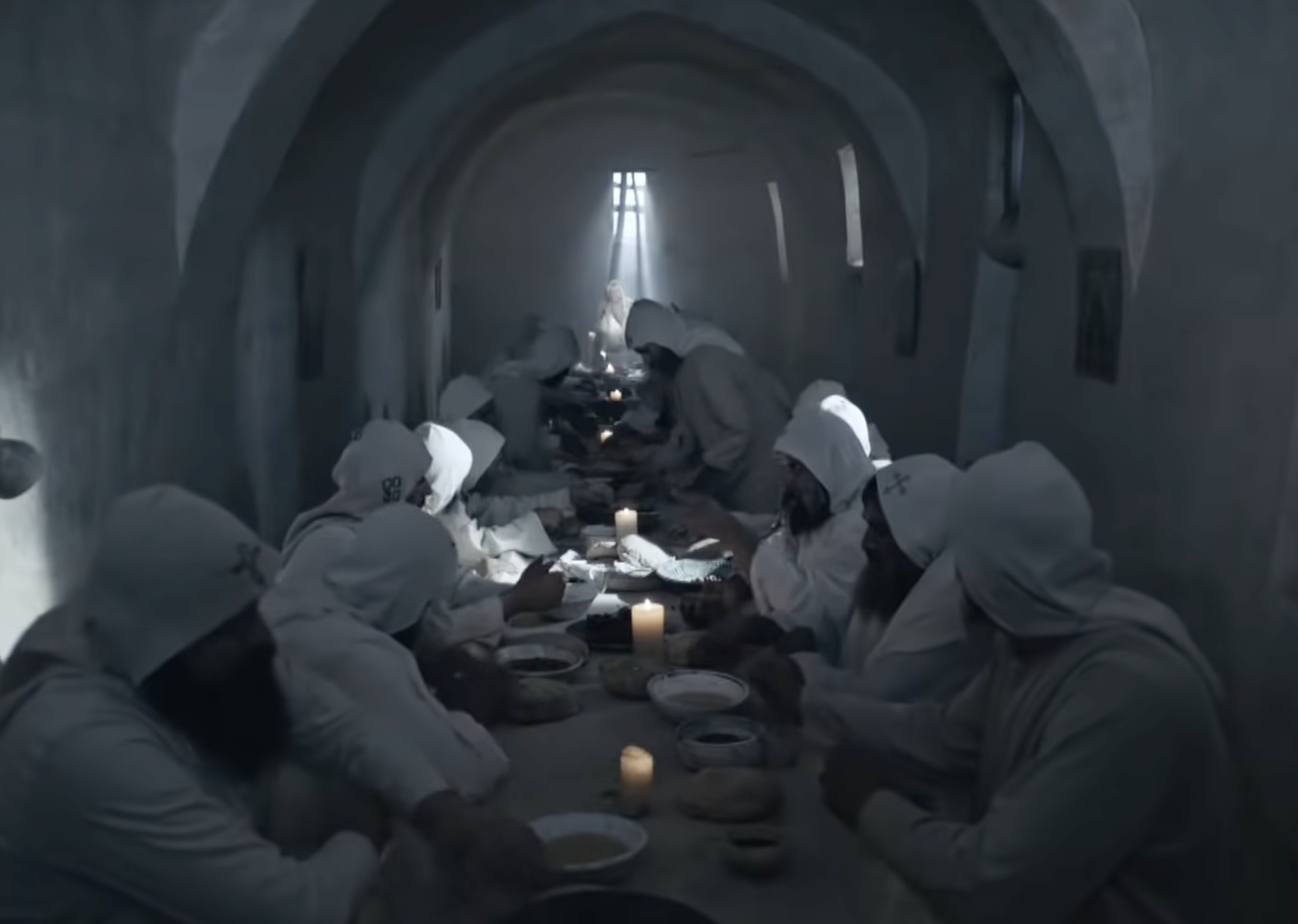
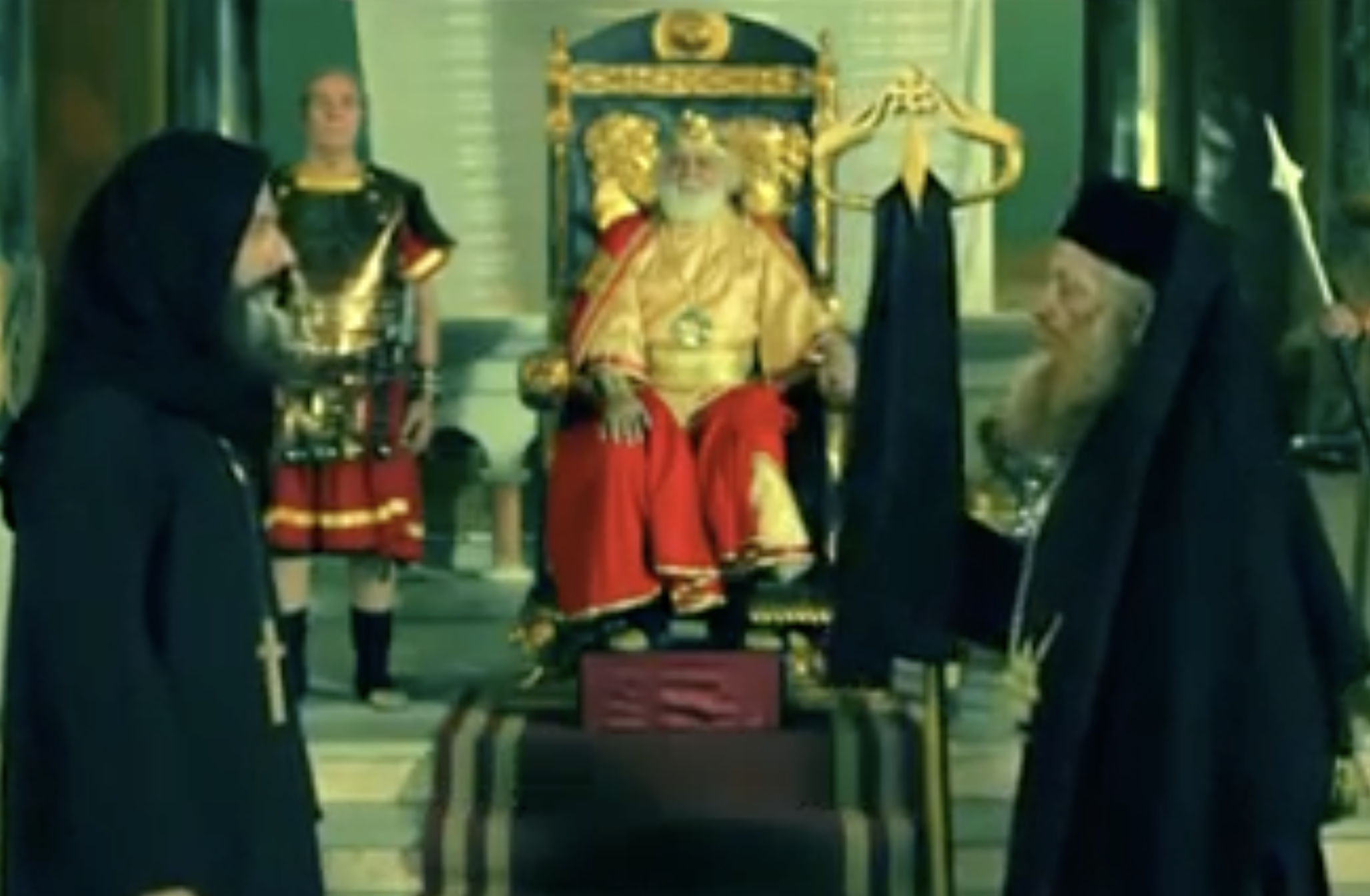
It is no surprise, then, that Coptic cinema revolves around this era. Over the past decades, the Coptic Orthodox Church has produced feature-length dramas set in the Roman age. Many center on specific saints or theologians; others dramatize the persecutions or the great Christological disputes. The dialogue is in colloquial Egyptian Arabic, and the style is often closer to devotional theater than to commercial cinema.

If one were searching for a Western analogy, they resemble something like superhero films, not in spectacle, but in structure. Their protagonists are morally unambiguous, endowed with supernatural power, and set against adversaries who embody persecution or error. The difference, of course, is that for the Copts these stories are not mythic entertainment but sacred history.
Rome as a Stage
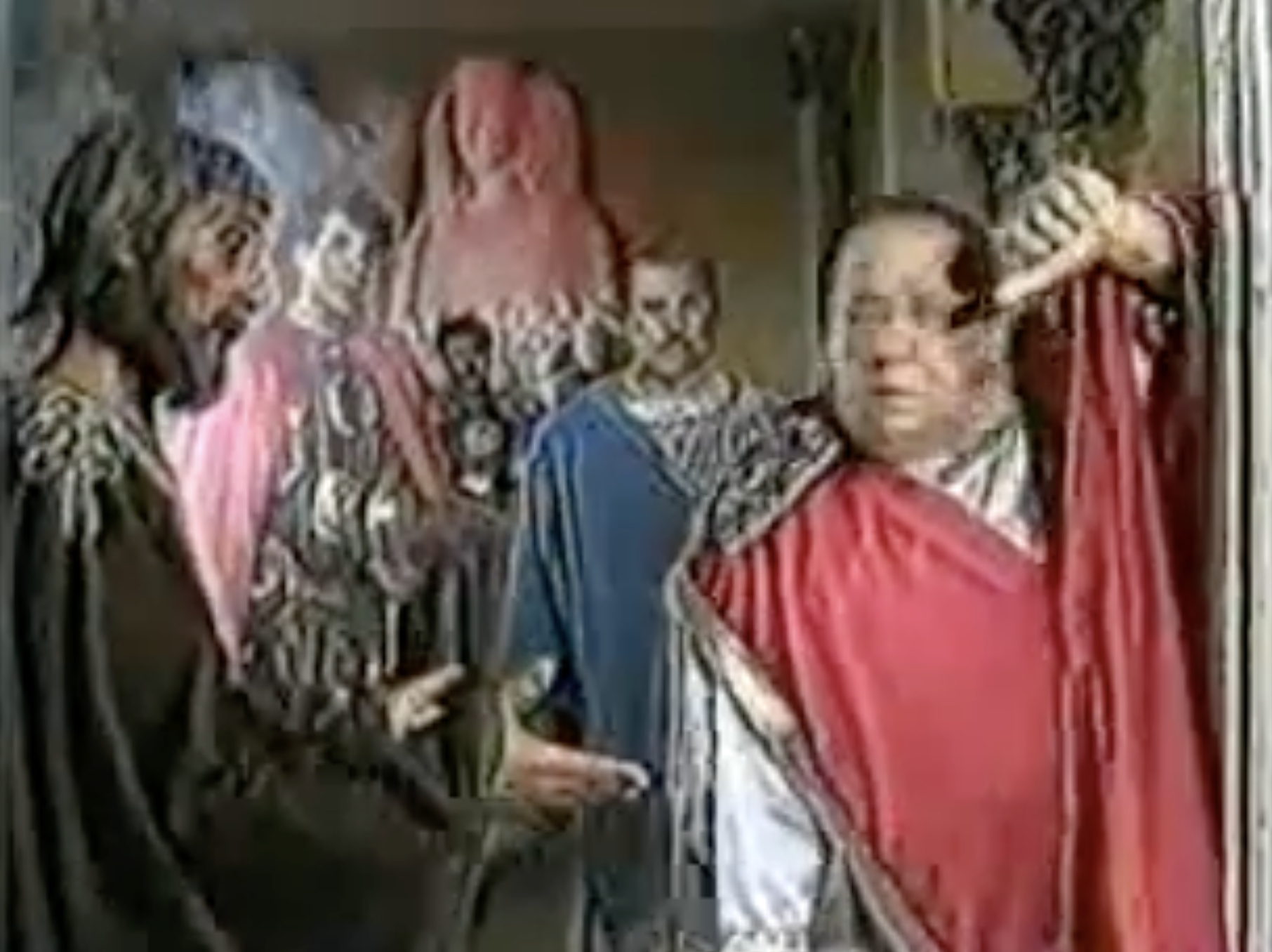
In pure historical terms, the Roman state was primarily an antagonist towards the Copts. Pagan Rome persecuted Copts for being Christian; Christian Byzantium persecuted Copts for doctrinal dissent. And yet the portrayal of Rome in these films is genuinely ambivalent. Rome is the persecutor in martyr narratives, yes. But it is not depicted as a metaphysical evil. The villains are specific governors or emperors, not "the Roman state" as such, and definitely not Roman civilization writ large. Warrior saints like St. Mercurius are even remembered in part for how they fought on behalf of the empire; there's even a patriotic undertone.
This is a radically different memory than, say, the Jewish memory of Rome. Rome is not the enemy; it's the stage. The persecution is what produced the martyrs, and the martyrs are the whole point. Without Rome, there is no arena for holiness to be tested and proved. In this aspect, the persecutions are a historical plot device rather than a civilizational crime. It's a theological mechanism. Rome is the fire through which the gold is refined. You don't hate the furnace, but you don't confuse it for the gold either.
Rome as Incense, not Marble
Here is something subtle but important. The West sees Rome as the foundation of a civic order, but Coptic memory sees it as the foundations of a spiritual one. Western memory emphasizes the marble temples, forums, and aqueducts. The Coptic memory is a haze of incense, perfuming a vibrant cast of saints, martyrs, and hermits.
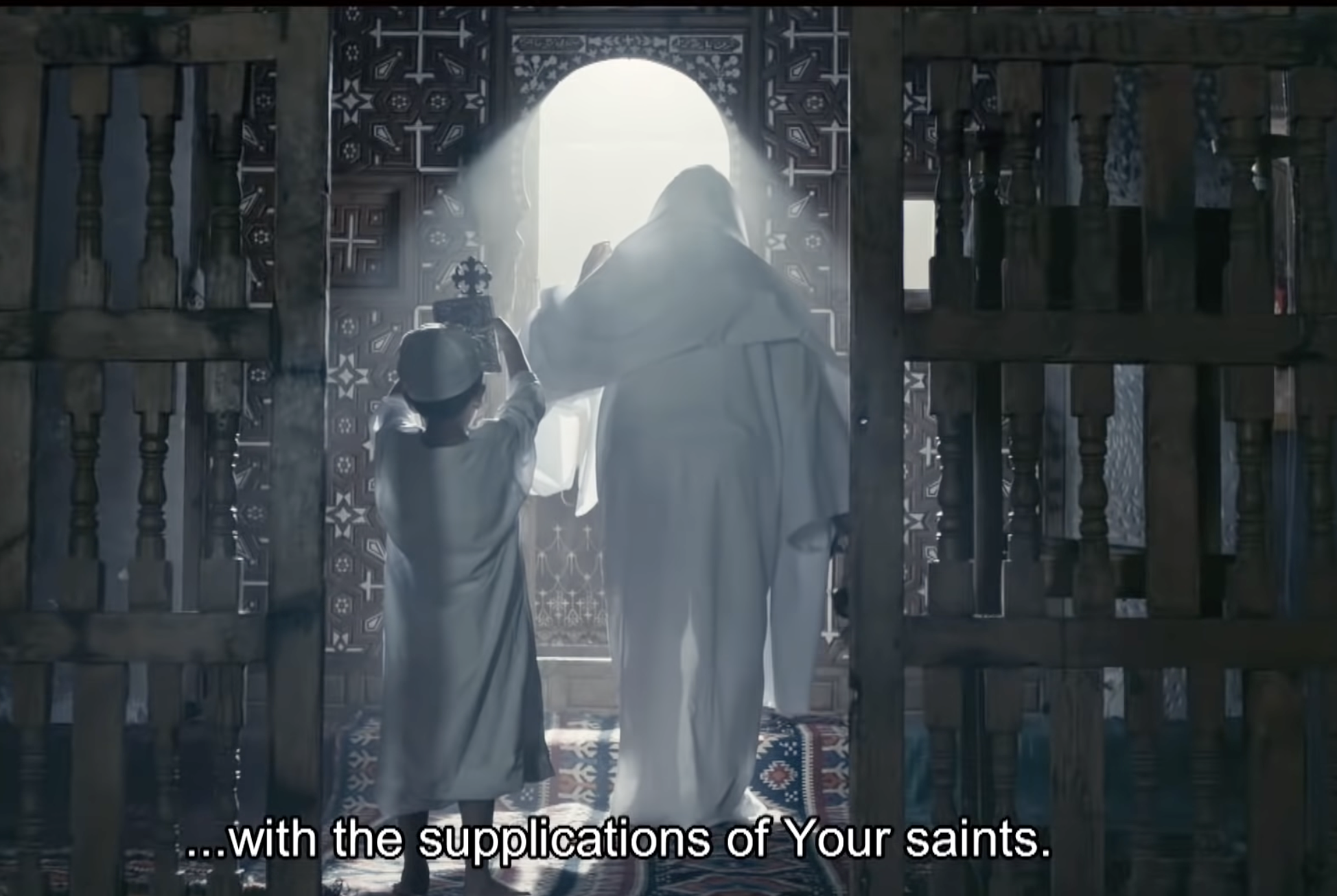
Copts certainly interacted with the state; they confronted governors, emperors, ecumenical councils, but political theory never became central to their self-understanding. Even in stories such as the conversion of Constantine, what is celebrated is not imperial power but its submission to theology. In a sense, theology becomes expansive enough to subordinate the state.
Beyond this, in most Coptic films, the identity of the emperor is often secondary, and policy is in the background. What matters are the saints and their inner lives. In this sense, Coptic memory renders history intimate. St. Anthony’s spiritual struggle against temptation matters more than the campaigns of an emperor. The tradition dramatizes intensely personal transformations: the conversion of St. Moses the Ethiopian from his life of banditry, the contemplative silence of St. Macarius in the desert, the tender friendship between St. Bishoy and St. Ephrem.
To be sure, Roman history is still a sense-making engine. In both Western and Coptic tradition, Rome is an instrument for interpreting the present, but only in this intimate setting. Where Western political discourse invokes the Roman Empire to frame questions of power or decline, a Coptic priest may interpret a spiritual crisis through the life of a Roman saint. In both cases, the Roman past becomes a lens through which the present is read, but in radically different spheres.
Eternal Rome vs. Rome Outside of Time
This spiritual focus transforms Rome into something greater than legacy. In Coptic tradition, the saints of the Roman period are more than purely historical figures like Cicero or Pliny. They act. They appear in dreams. They work miracles. Copts take these appearances seriously as genuine supernatural events. The saint that you just watched a movie about can intercede for your mother's cancer.
Many Copts have a personal, lifelong devotion to specific saints and credit them with spiritual guidance. For instance, Mother Irene, a 20th century Coptic nun, had a profound spiritual fellowship with the 3rd century Roman saint, St. Mercurius, who appeared to her many times throughout her life:
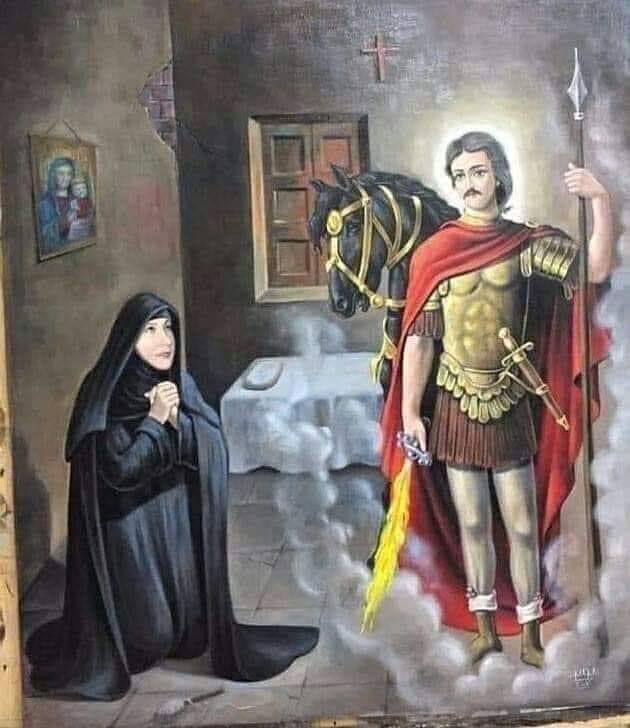
So for the Copts, Rome is not eternal in the way it is for the West. It is not a completed legacy that lives on. It is present. The Copts have not merely inherited Rome; they have reconstituted it ontologically. Rome has become a spiritual topos, a realm that stands outside linear time yet presses continuously upon the present. Its saints are still working; its martyrs are still appearing, at times altering history through their admonitions. The Roman age is not concluded; it is liturgically re-entered. And it happens every Sunday, in every Coptic church.
You might also like:
- The Legend of Odisho · What an Assyrian folk hero's tale reveals about honor cultures in the Middle East.
- The Secret Religion · A tour of esoteric traditions hidden in plain sight across millennia.