The Secret Religion
People often light up when I mention I studied the ancient Middle East. It’s funny; I love it. The Middle East is one of those niche fixations that normal people actually enjoy hearing about. Wine is like that too. You can drone on endlessly about French varietals and people nod along with something like piety. Start talking about the Byzantine Empire and they’ll stone you to death.
Possibly the most interesting and under-appreciated phenomenon about the Near East is a group of secret religions: a set of ideas that have survived and spread across millennia, hidden in plain sight within other traditions, and no one can fully explain why.
I don't mean anything especially dramatic. Academia broadly labels these things as esoterica: religious traditions or sub-currents that survive by concealment, initiation, or double life. An interesting example is the Shamsiya1, heathen sun worshippers who survived in northern Mesopotamia well into the 19th century before formally converting to Syriac Orthodox Christianity, often continuing their older practices in private. I once met a man in Södertälje who was Syriac Orthodox but placed unusual emphasis on praying towards the sun. I didn't think too much of it at the time, but I look back and wonder whether older Shamsiya sensibilities lingered beneath the surface.
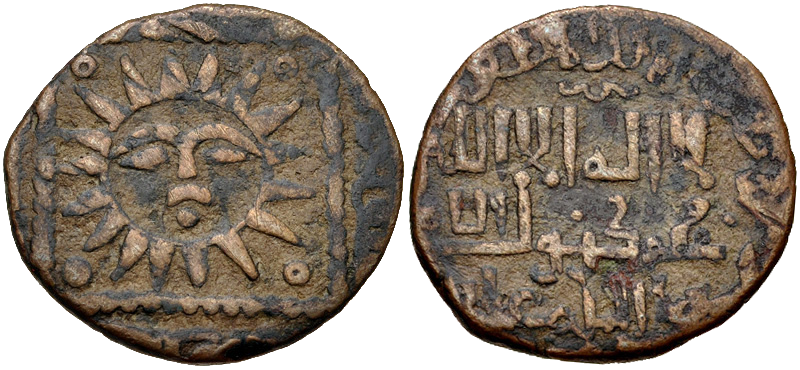
The Shamsiya had an Armenian counterpart: the Arevortik (the name roughly also means “sun worshipper”). They persisted into the 20th century as crypto-Armenian Apostolic Christians. Professor James Russell once told me an extraordinary story about them, an eyewitness account from a Glendale hospital worker who heard the life story of an elderly Arevortik man on his deathbed, refusing to allow an Armenian priest to administer last rites.2 Fascinating stuff.
In these traditions, the logic is simple: certain teachings are so sacred that they must be hidden. They are not meant for everyone. They are for initiates.
What is the Secret Religion?
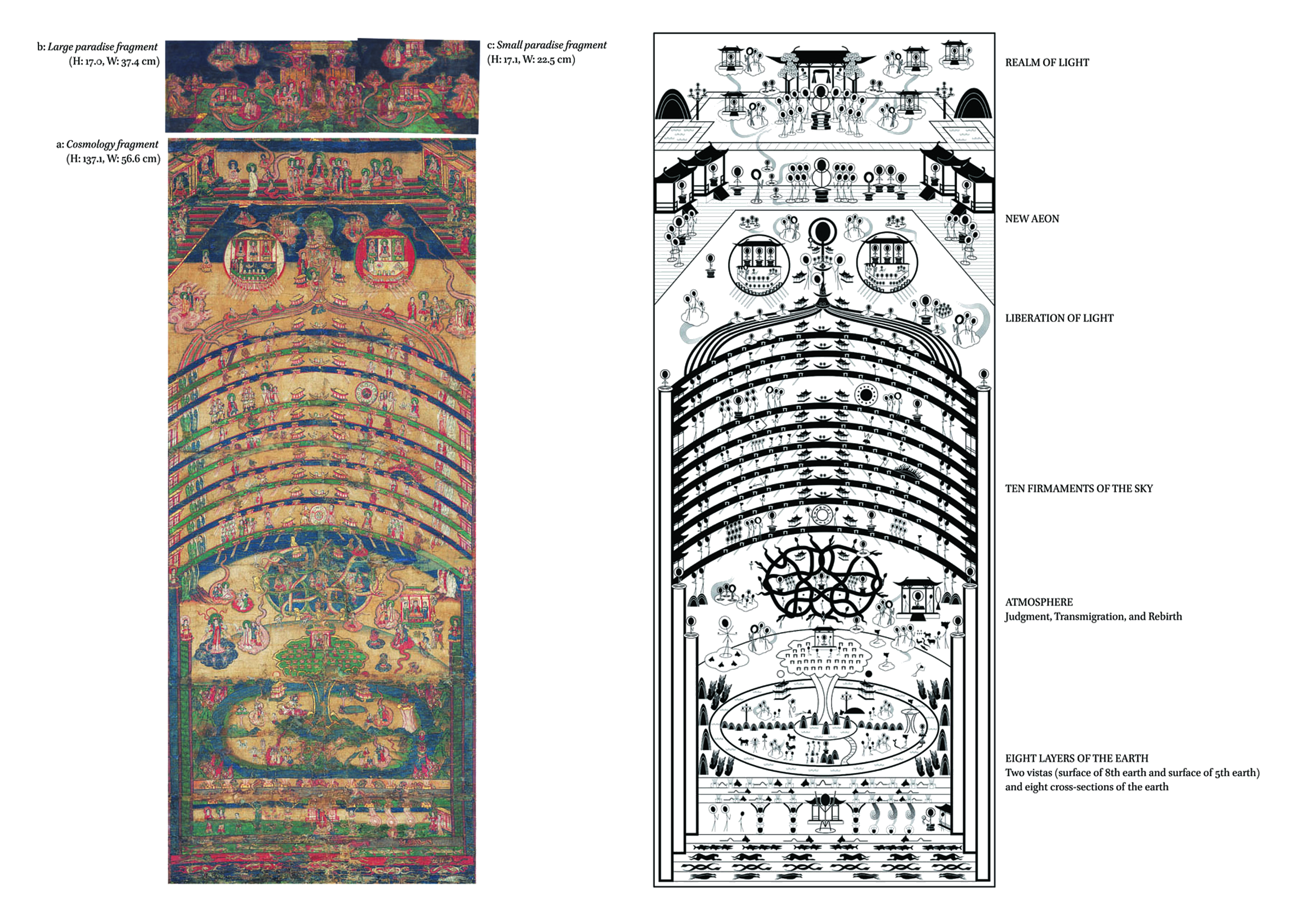
Here's where things get strange. If you take these traditions seriously and start reading their actual content, you notice something unsettling: they keep saying the same thing. Not identical doctrines, but a recognizable stance: the world is a trap. You're asleep. Your unease is not a personal failing; it's diagnostic. Salvation comes not through obedience but through waking up. There's a small group who knows the truth. If this sounds familiar, it should. It's the plot of The Matrix, a film that became a global phenomenon in 1999 despite most of its audience having no exposure to Manichaeism, Bogomilism, or Qabbalah. For some reason, people throughout history deeply resonate with the idea that they are trapped in the Matrix, and they need to get out:
Here's a concrete example. In the 1100s, a movement called the Cathars spread across southern France. To a Cathar, the physical world (everything you can touch, eat, build, or hold) was not created by God. It was created by something like a devil: a lesser, malicious being who trapped sparks of the divine inside human bodies. Your soul was a prisoner. Your body was the cell. And the Catholic Church? It wasn't just wrong. It was part of the system, a structure designed to keep you comfortable inside the prison so you'd never try to leave.
The way out was not prayer, confession, or good works. It was initiation. A small inner circle of Cathar leaders, the perfecti, could perform a ritual called the consolamentum, a laying-on of hands that broke the cycle. Without it, when you died, your soul got recycled back into another body. With it, you were free. Some Cathars, after receiving it, stopped eating entirely. If the material world is a trap, the logic tracks: why engage with it at all?
Every piece of the pattern shows up here. The world is a trap. You're stuck in a loop. The mainstream religion is keeping you asleep. A small group knows the truth. And salvation isn't about being good. It's about waking up and getting out.
Key Characteristics of the Secret Religion
I call this bundle The Secret Religion3 (capital S). Broadly speaking, it looks like this:
- Reincarnation: Souls cycle through multiple lifetimes
- Anticosmism: The material world is bad: evil, illusory, or a trap
- Gnosis: Salvation comes through understanding or awakening rather than good deeds or faith
- Soul Ascent: The cosmos is layered; the soul must rise through archons, aeons, sefirot, or watchhouses to reach the divine
- Initiatory: These teachings are reserved for a select group of initiates
- Cryptopraxis: Practices and teachings are kept secret, with members often outwardly practicing a mainstream religion
If you think about it, this posture is almost the antithesis of Christianity, Zoroastrianism, Sunni Islam, or exoteric4 Judaism:
- Singular Life: One life, followed by judgment
- Procosmism: Creation is good, and, though fallen, is not a mistake
- Faith and Good Deeds: The emphasis is on belief and right action, not awakening to hidden truth
- Divine Judgment: Salvation is a verdict, not a journey through cosmic layers
- Messianism: A future redeemer will rectify the world
- Universalism: The message is meant for everyone
- Martyrdom: Death is preferable to concealment
Now, these ideas don’t belong to one religion. They appear along a spectrum, to varying degrees, in traditions as diverse as:
| Tradition | Date | Reincarnation | Anticosmic | Gnosis | Initiatory | Cryptopraxis | Soul Ascent |
|---|---|---|---|---|---|---|---|
| Buddhism5 | c. 5th c. BC, India | ✓ | ✓ | ✓ | ~ | ~ | |
| Neoplatonic Gnosticism6 | 1st–3rd c., Eastern Med. | ~ | ✓ | ✓ | ✓ | ~ | ✓ |
| Christian Gnosticism7 | 1st–3rd c., Roman Near East | ~ | ✓ | ✓ | ✓ | ✓ | ✓ |
| Mandaeism8 | 1st–2nd c., Mesopotamia | ✓ | ✓ | ✓ | ~ | ✓ | |
| Manichaeism9 | 3rd c., Persia | ✓ | ✓ | ✓ | ✓ | ||
| Yazidism10 | Ancient / Late Antique, Mesopotamia | ✓ | ~ | ~ | ✓ | ✓ | ~ |
| Bogomilism11 | 10th c., Balkans | ✓ | ✓ | ✓ | ✓ | ~ | |
| Druze12 | 11th c., Levant | ✓ | ~ | ✓ | ✓ | ✓ | ~ |
| Catharism13 | 12th–13th c., S. France | ✓ | ✓ | ✓ | ✓ | ~ | |
| Qabbalah1415 | 12th–16th c., Jewish world | ✓ | ~ | ~ | ✓ | ✓ | ✓ |
| Scientology16 | 1950s, USA | ✓ | ✓ | ✓ | ✓ | ~ | ✓ |
Too Similar to be Coincidence
The fact that this story keeps getting reinvented, by ancient Persians, medieval French heretics, and Hollywood screenwriters, is not something you can wave away. What's remarkable is not just the similarity, but the breadth: historical, geographical, cultural. Either these ideas traveled, or they keep re-emerging on their own, or something else is going on.
So the obvious question is: where did these ideas come from? There are a number of explanations, but, as we'll see, each one has its own problems.
1. Genealogy: The Ideas Traveled
The first explanation is genealogy: the ideas were transmitted along historical lines. Not a few of these connections are generally accepted in scholarship: Bogomilism and Catharism, Qabbalah and Gnosticism, and others.
The Bogomil-Cathar connection is well established.17 The Cathars adopted the Bogomil creation myth (the Interrogatio Johannis), their federal church structure (reorganized at the Council of Saint-Félix in 1167 under the Bogomil bishop Nicetas), and their initiation ritual (the consolamentum). Scholars debate the details, but as the Encyclopaedia Iranica concludes, "the transmission of Bogomil dualism to moderate Cathar dualism" is beyond reasonable doubt.
Similarly, Gershom Scholem, the preeminent scholar of Jewish mysticism, traced clear lines between Qabbalah and ancient Gnosticism.18 The sefirot rhyme with the Gnostic aeons. The soul's ascent through layered divine realms echoes the Gnostic journey through the archons. Even reincarnation, which feels so alien to mainstream Judaism, is central to Qabbalistic thought. These aren't superficial resemblances; they suggest either transmission or, at minimum, a shared symbolic grammar.
But the moment you try to complete the picture, things get ugly fast. You can plausibly trace Bogomilism to Catharism, or late antique Gnosticism to medieval Qabbalah. But can you connect Qabbalah to Mandaeism? Yazidism to any of them? Buddhism to the Mediterranean schools? To make the full genealogy work, you’re forced into increasingly unsatisfying leaps: perhaps ideas crossed confessional boundaries without leaving textual fingerprints; perhaps oral transmission did all the heavy lifting while politely declining to be documented. None of this is impossible, but none of it is clean.
And even where transmission seems likely, the mechanism remains obscure. Did late antique Gnostics convert to Judaism and smuggle their cosmology into rabbinic circles? Were there inter-religious salons where initiates swapped metaphysics across confessional lines? Did wandering ascetics carry fragments of doctrine from one community to another? Once you take transmission seriously, it stops resolving the mystery and starts multiplying it.
And this is the point. Esoteric movements are bad at leaving records by design. You can connect a few of them together. You cannot draw the full family tree without hand-waving. The honest conclusion is not that genealogy is false, but that a complete taxonomy is academically unprovable. Push it too far and you won't be refuted, you'll be (probably rightly) dismissed as a crank.
2. Coincidence: The Ideas Rhymed by Chance
The second explanation is coincidence: the ideas just happen to resemble one another. I don’t find this persuasive, and not because I’m allergic to coincidence in principle. Coincidence happens all the time. But coincidence at this scale, across centuries, cultures, languages, and theological systems, requires a story. Patterned similarity without causation is not neutrality; it is acausality.
To say “these traditions are similar, but unrelated” is to make an unstated metaphysical claim: that complex structures can recur repeatedly without transmission, constraint, or generating mechanism. In any other domain, biology, linguistics, economics, we would not accept this. We would ask what pressures, incentives, or structures are producing the resemblance. We would not shrug and call it chance.
Coincidence is not an explanation; it is a refusal to specify a cause. It tells us nothing about why this bundle of ideas keeps reappearing together rather than some other bundle, or why they cluster so reliably around the same themes: transmigration, awakening, secrecy, and exit from the world. If one rejects genealogy and refuses structure, what remains is a metaphysics in which patterns emerge for no reason at all. That may be psychologically comfortable, but it is not intellectually modest.
3. Structure: The Ideas Re-Evolved
This brings us to the third explanation, and probably the most respectable one: structure. These ideas re-emerge because they solve recurring human problems.
These systems do several clever things at once. They solve the problem of moral luck by extending justice beyond a single lifetime. They function as self-enforcing moral contracts, requiring no centralized surveillance. They allow minority or dissident communities to survive through secrecy, initiation, and tiered knowledge. And perhaps most importantly, they offer an exit valve for a particular kind of person.
Some people experience ordinary life as vaguely wrong. The routines feel like a trap. The reward structures feel arbitrary. Social life feels theatrical. For these personalities, salvation-as-rectification, be good, wait your turn, trust the system, feels like being asked to redecorate a prison. Anticosmic religions offer something seductive and validating: your discomfort is not a flaw. You are in exile. And salvation is not a pardon you receive; it's a problem you solve.
This is where the elements interlock. Reincarnation gives anticosmism its teeth. Without it, the prison is temporary. You die and it's over. But if death simply recycles you back into the system, escape becomes urgent. Reincarnation reframes frustration as cosmic diagnosis: the problem isn't just this life, it's the system itself. In this sense, it functions for the Secret Religion the way hell functions for Christianity or Zoroastrianism, as the forcing function. The difference is what it forces you toward: not obedience, but awakening.
Taken together, these features look less like borrowed doctrine and more like a stable configuration. Under the right conditions, marginality, alienation, distrust of authority, the same solutions keep presenting themselves. Extend justice beyond one life. Replace surveillance with cosmology. Restrict access to dangerous knowledge. Reframe alienation as insight. Turn salvation into a technical problem rather than a moral plea.
In other words, these ideas do not merely recur; they cohere. Reincarnation, anticosmism, gnosis, secrecy, and initiation are not independent beliefs that happened to cluster. They function together as a system. Remove one and the structure weakens. Remove reincarnation and the urgency collapses. Remove secrecy and the group dissolves. Remove gnosis and it loses appeal for the alienated intellectual.
This doesn’t prove that these systems are true. But it does explain why they are durable. The Secret Religion may not need to be transmitted intact. Given the right pressures, it can reassemble itself.
4. Something Keeps Introducing Them
The final, obvious, and perhaps most unorthodox explanation is that these ideas emerge supernaturally; perhaps a primordial cacodaemon whispers the same idea to humanity over and over again. Every few centuries it nudges someone like Plato, Mani, or Hubbard and says, psst, the world is a trap, but you can get out if you’re smart enough. I don’t offer this as theology; I offer it as a reminder that once coincidence is ruled out, and the easier explanations are taken seriously, the remaining options hasten toward the exotic and whimsical.
If such a ghoul could speak, what would he say? He would not be one of Dante’s fire-and-brimstone demons, or even a sensual incubus like Faust’s Mephistopheles. This agent of the diabolic would be closer to an Uncle Screwtape. Delighted by misleading promising individuals, he would tempt the intelligent to turn their backs on the world and abandon hope of changing it. Salvation as escape is, in this sense, the inverse of salvation as transformation. Instead of loving the world and healing its corruption, we disown and evade it.19 This is a seductive proposition for the morally serious: apply your conscience inward, never outward. So our ghoul would console the sensitive, reward melancholy, and encourage endless introspection instead of action. A clever ghoul.
Whether or not one believes in the supernatural, this diabolic figure reveals the shape of a certain temptation. Not everyone is seduced by wealth or pleasure. Some people, including and perhaps especially intelligent people, are undone by ideas. The intellectual tempter is among the most dangerous kinds, precisely because conviction itself can feel salvific. History offers no shortage of examples in which intelligent people were bewitched by beautiful ideas that proved profoundly impractical, incongruent with human nature, or openly at odds with existence itself. So whether our demon is real (and I am willing to admit that he might be), or merely a literary construction, his legacy invites our self-reflection: on the ways we, too, may have been bamboozled by ideas that are elegant, consoling, and untrue.
You might also like:
- The Memory of Rome in Coptic Christianity · How Egyptian Christians reconstituted the Roman Empire as a living spiritual reality.
- The Legend of Odisho · What an Assyrian folk hero’s tale reveals about honor cultures in the Middle East.
Footnotes
-
The Shamsīyah were concentrated in Mardin and the Tur Abdin region. They converted to the Syriac Orthodox Church in the 17th century to avoid Ottoman persecution but retained older practices. Adrian Fortescue described them in 1913 as "a curious group of semi-Christian Jacobites who were once sun-worshippers." See Wikipedia: Shamsīyah. ↩
-
For further reading on the Arewordik', see James R. Russell, "Heresies: On an Armenian Prayer to the Sun," in Poets, Heroes, and their Dragons (Brill, 2020), 1143–1156. Russell notes that the Arewordik' beliefs "were probably related to those of the Shamsis in northern Syria, whose name contains Arabic shams, 'sun'." He also observes that "after the Armenian Genocide there are no Children of the Sun around any longer." ↩
-
If you want to call this all “Gnosticism,” I’m fine with that. However, the term is historically specific, heavily contested, and comes with a lot of scholarly baggage. More importantly, it suggests a single tradition you can trace, whereas what I’m interested in is a pattern that keeps reappearing, sometimes without any provable lineage. “The Secret Religion” is just a way of naming that recurrence without pretending the genealogy is cleaner than it is. ↩
-
"Exoteric Judaism" is an awkward but necessary term. Rabbinic Judaism as practiced by most Jews throughout history does not emphasize reincarnation, cosmic ascent, or secret initiatory knowledge. But Qabbalah, which does emphasize these things, is also authentically Jewish and has been mainstream in many communities since the 16th century. The distinction is not between "real" and "fake" Judaism, but between the public, halakhic tradition and the esoteric, mystical one. ↩
-
Not every tradition here is cryptopractic; Buddhism and Manichaeism were both major world religions. But they share the underlying posture: samsara as trap, enlightenment as escape, nirvana as exit. The ~ on Soul Ascent reflects that while Buddhist cosmology includes heavenly realms, the emphasis is on escape from the cycle rather than ascent through levels. See Oxford Bibliographies: Saṃsāra and Rebirth and Carl Becker, Breaking the Circle: Death and the Afterlife in Buddhism (Southern Illinois University Press, 1993). ↩
-
Plotinus (AD 204–270) developed a doctrine of the soul's ascent (henosis) toward union with the One through progressive stages. Porphyry reports that Plotinus achieved mystical union four times during the years they knew each other. See the Internet Encyclopedia of Philosophy: Plotinus and Mateusz Stróżyński, "The Ascent of the Soul as Spiritual Exercise in Plotinus' Enneads" (2020). ↩
-
The Nag Hammadi library, discovered in Egypt in 1945, contains over 50 Gnostic texts including the Gospel of Thomas and the Apocryphon of John. The demiurge (Ialdabaoth) appears as the ignorant creator of the material world, trapping divine sparks in flesh. See James M. Robinson (ed.), The Nag Hammadi Library in English (Brill, 1977) and the Internet Encyclopedia of Philosophy: Gnosticism. ↩
-
The Mandaeans are a Gnostic sect surviving in Iraq and Iran. The name itself means "knowledge" (manda). They lack reincarnation; the soul ascends through mataratas (watchhouses) to the world of light, but otherwise fit the pattern closely. See Encyclopaedia Iranica: The Mandaean Religion and E.S. Drower, The Mandaeans of Iraq and Iran (Oxford, 1937). ↩
-
Founded by Mani (AD 216–274) in Sasanian Persia. The cosmos results from a primordial conflict between the Kingdom of Light and the Kingdom of Darkness; salvation comes through liberating light particles trapped in matter. Souls of the unrighteous are "condemned to rebirth in a succession of bodies." See Britannica: Manichaeism and Routledge Encyclopedia of Philosophy: Manicheism. ↩
-
The Yazidis practice kiras guhorîn ("changing of garments"), a doctrine of soul transmigration. Yazidis believe the Seven Holy Beings periodically reincarnate in human form (koasasa). Their esoteric teachings are transmitted orally by religious leaders. See Encyclopaedia Iranica: Yazidis and Eszter Spät, The Yezidis (Saqi Books, 2005). ↩
-
A 10th-century Bulgarian neo-Gnostic sect teaching that the material world was created by Satan (Satanael). The foundational scholarly work remains D. Obolensky, The Bogomils: A Study in Balkan Neo-Manichaeism (Cambridge, 1948). The primary source is Cosmas the Priest's 10th-century polemic Against the Newly-Appeared Heresy of the Bogomils. ↩
-
The Druze doctrine of taqammuṣ (reincarnation) holds that souls transmigrate only within the Druze community, and gender cannot change between lives. See Gebhard Fartacek (ed.), Druze Reincarnation Narratives (Peter Lang, 2021) and Samy Swayd, The Druzes: An Annotated Bibliography (Kirkland, 1998). ↩
-
The Cathars professed a neo-Manichaean dualism; the perfecti received the consolamentum, freeing them from the cycle of incarnation in evil matter. See Malcolm Barber, The Cathars: Dualist Heretics in Languedoc (Longman, 2000) and Britannica: Cathari. ↩
-
Qabbalah's ~ on anticosmism reflects a nuance: while Qabbalah views creation as fundamentally good, the tikkun (rectification) framework involves releasing divine sparks (nitzotzot) trapped within material shells (klipot), a softer version of the anticosmist impulse. On the sefirot and soul ascent, see Gershom Scholem, Major Trends in Jewish Mysticism (Schocken, 1941) and Chabad: Neshamah, Levels of Soul Consciousness. ↩
-
This may surprise some readers, but reincarnation (gilgul neshamot, "cycle of souls") is a widely held belief among Orthodox Jews, particularly in Hasidic communities. The doctrine is elaborated in the Arizal's Shaar HaGilgulim (Gate of Reincarnations). See Chabad: Judaism and Reincarnation. ↩
-
Scientology scores ~ on Cryptopraxis because early Scientology claimed compatibility with other religions, but Scientologists don't actually hide inside another tradition. The OT levels and initiatory secrecy are genuine. On the Gnostic parallels, religious scholar J. Gordon Melton observes that the OT levels are "basically a variation of the Gnostic myth about souls falling into matter." See Britannica: Thetan. ↩
-
The scholarly consensus is summarized in Encyclopaedia Iranica: Cathars, Albigensians, and Bogomils. For a detailed treatment of the transmission mechanisms, see Dick van Niekerk, "Crossroads of Bogomils and Cathars" (2012). The debate is not whether transmission occurred, but whether it extended to "radical" as well as "moderate" dualism. ↩
-
Gershom Scholem, Origins of the Qabbalah (Princeton, 1987). Scholem writes: "The historian of religion is entitled to consider the mysticism of the Merkabah to be one of the Jewish branches of Gnosticism" (p. 21). On the sefirot: "The sefiroth now signify the aeons, the powers of God, which are also his attributes" (p. 81). And on the Bahir: "Even though the language is that of the Aggadah and the forms of expression are Jewish, the God described is of the kind we know from gnostic mythology. Most of the expositions and the scriptural interpretations in the Bahir are, in this sense, gnostic" (p. 67). See also Stanford Encyclopedia of Philosophy: Gershom Scholem. ↩
-
It should be noted that some variants of this pattern, notably Qabbalah, do incorporate ideas of cosmic reparation and affirm humanity’s capacity to participate in the healing of the world (tikkun). In this respect, Qabbalah diverges meaningfully from more radically anticosmic traditions, probably through blending the procosmic foundations of exoteric Judaism. Nevertheless, no serious discussion of these secret religions can omit Qabbalah. As Gershom Scholem observed, its symbolic grammar and cosmology are almost certainly genealogically related to Late Antique Gnosticism, which was unequivocally anticosmic. ↩