"I Feel God in This Chili's Tonight": The Mechanics of Cringe
Why is Michael Scott hilarious in “Michael Scott Paper Company,” but excruciating in “Dinner Party”? Why do we wince when Michael makes a fool of himself in “The Dundies,” but find ourselves enchanted when Pam gets drunk and embarrasses herself in the very same episode?
The answer has less to do with what Michael does than with how close we feel to him while he does it. Comedy requires a certain distance between the audience and the person on stage. It relies on recurring characters performing recurring functions: the imposter inflates himself, the wit exposes him, and the buffoon releases tension by doing something ridiculous. Cringe begins when that distance collapses and the machinery stops working. It is a specific failure mode of the comedic engine.
Cringe Is Not Embarrassment
Cringe is not simply embarrassment. Take The Office. Michael Scott makes a fool of himself almost every episode. He tells jokes that bomb; he desperately seeks people's approval, and he frequently mistakes discomfort for admiration.
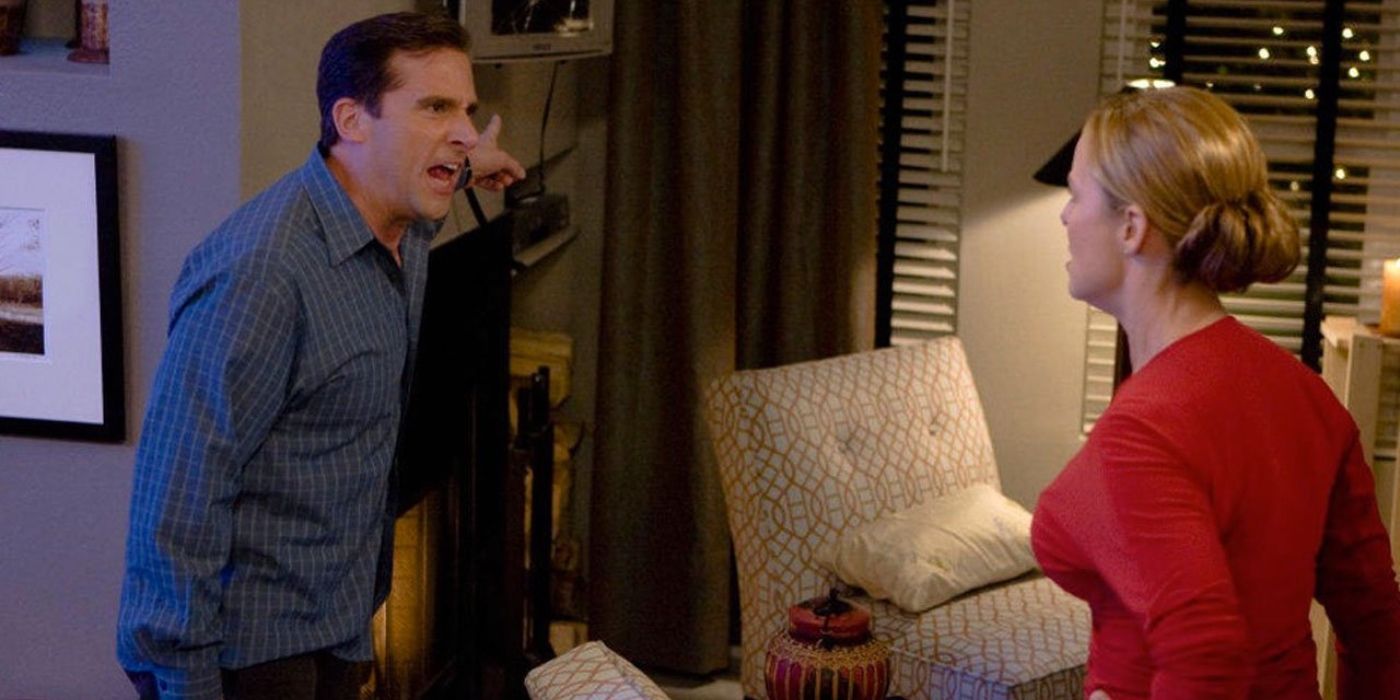
Compare "Michael Scott Paper Company" with "Dinner Party." In the former, Michael's chaotic and unrelenting optimism is decisively endearing. We root for him as he outmaneuvers corporate. Yet in "Dinner Party," that same energy becomes unbearable. Michael insists everything is fine as Jan plays her assistant's bizarre original song, “That One Night,” and proudly shows off their tiny plasma television. It remains a beloved episode for fans of cringe comedy, partly because it blurs the line between humor and discomfort. Rolling Stone described it as "brilliantly excruciating."
The Puzzle: One Night at the Dundies
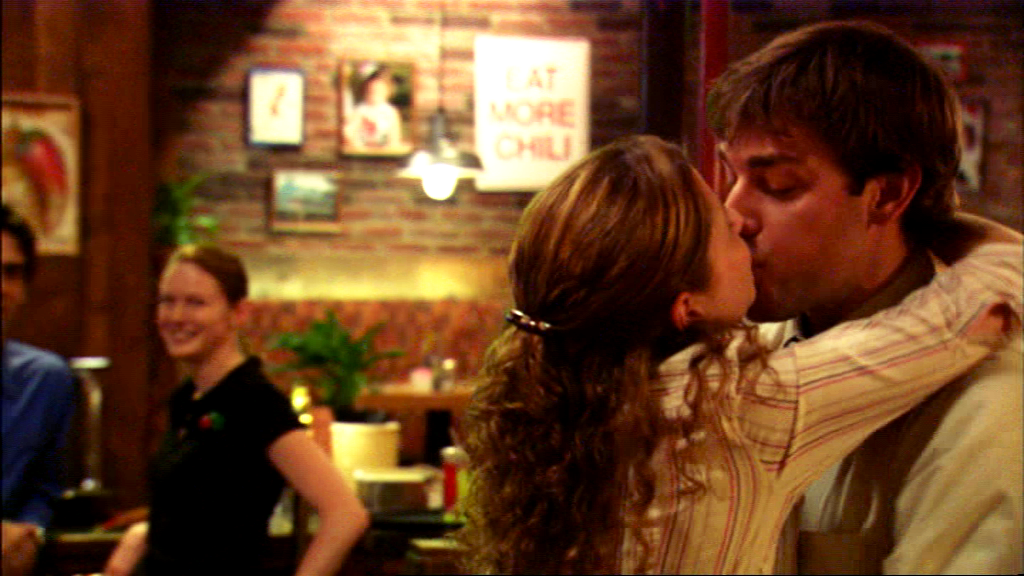
These sorts of vibe shifts can even happen within the arc of a single episode. Consider "The Dundies," Michael's annual awards ceremony. The whole episode frames it as a total disaster. His routine flops; no one's into it, and every failed punchline lands more brutally. Then the register abruptly flips. Pam gets drunk, staggers onstage to accept an award, and delivers one of the all-time greatest lines of the series: "I feel God in this Chili's tonight." Then she kisses Jim in front of everyone. By most accounts, it's more awkward, embarrassing, and socially transgressive than anything Michael does, but somehow it's hilarious and delightful. The air of cringe dissolves.
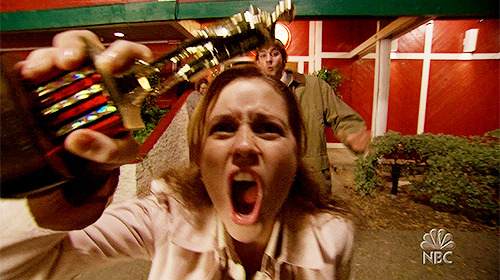
This is a genuine puzzle. If cringe were simply the experience of watching someone embarrass themselves, Michael and Pam should land the same way, but they don’t. Both violate social norms. Both make a scene in front of the good people of Chili’s. Yet Michael makes us uncomfortable, while Pam is hilarious. Somehow, the vibes are back.
Comedic Distance
The difference, I think, is comedic distance: the distance between the performer and the audience, and between the fictional situation and ordinary reality. Comedy requires us to see the embarrassing person and their situation as framed, as something set apart from ordinary reality rather than a direct reflection of our own lives. This is why clowns wear makeup. The costume creates a separation between the performer and the audience. It tells us that we are watching a performance. The clown is safely other.
This is also why people are often funnier when they are drunk. It's not simply that alcohol makes people do amusing things (it does), but it creates a layer of distance between the person and the behavior. A normally reserved person can dance badly, say something ridiculous, or make a fool of themselves while maintaining a kind of plausible deniability. They can blame it on the juice.
And the reverse is sadly also true. When an alcoholic gets drunk and acts a fool, that distance disappears. We no longer see a person playfully stepping outside themselves, but rather behavior that reflects a painful reality. The humor turns into discomfort because the excuse has vanished. We are no longer enjoying a temporary performance; we are witnessing genuine struggle.
Cringe comedy plays with that distance by making the buffoon a little too relatable. He's too much like us, so we stop laughing at the clown and start identifying with him. Instead of observing someone else’s humiliation from a safe distance, we start to experience it vicariously. In a sense, cringe comedy produces discomfort to the extent it collapses this distance. There is the subtle discomfort of "I've seen this before," the palpable tension of, "I know someone like this," and the burning anguish of, "Oh my god, he's me."
And I don't think this is pure literary theory either. There is even some scientific evidence for it: neuroscientists have linked the experience of cringe to empathy, particularly the vicarious experience of another person’s embarrassment. What literary theory describes as the collapse of comic distance may, in other words, have a recognizable psychological correlate: we are no longer merely laughing at the buffoon. We are, to some degree, feeling what it is like to be him. The spectator has slipped into the buffoon’s position. The spectator is no longer watching the audience laugh at someone else; he is watching the audience laugh at him.1
The Comedic Machinery behind The Office
The Office did not invent comedic distance; it is built into a machinery much older than television. For all the innovations of modern sitcoms, they still run on mechanisms and archetypes worked out in Ancient Greece.
Most comedic plots involve an antagonist who inflates himself and creates drama: the alazon, the imposter. The apparently humble protagonist then exposes this imposter through humor. This is the eiron, the ironic wit. Imagine Dwight talking down to people and Jim pranking him to bring him back down to earth. Meanwhile, Kevin and Creed keep us laughing with their antics. These are the bomolochoi, the buffoons, whose shameless absurdity releases the tension. Stanley, the agroikos, rolls his eyes at the nonsense. Every so often, everyone piles on Toby, the pharmakos, the comedic scapegoat.2
Michael, for the sake of character depth, flexes between the two roles of alazon and bomolochos. In some episodes he is the comedic antagonist, oppressing the office while Jim, Oscar, and Pam take the piss out of him. In others he is pure buffoon, stumbling from one hijink into the next. But Michael is unique because he cannot stay inside a comic category. He is an alazon who believes himself to be the hero, and a bomolochos to everyone watching. The tension between those two perspectives is what makes him unstable, and it is why he oscillates between lovable and unbearable.
The Rules of Buffoonery
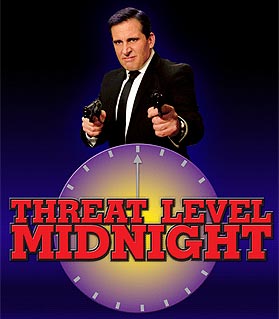
Buffoonery requires absurdity. A good bomolochos is larger than life. In "Threat Level Midnight," Michael is delightfully absurd: a secret agent mourning his wife Catherine Zeta-Scarn, flanked by a robot butler, saving the NHL All-Star Game from a villain named Goldenface, and leading an entire bar in a dance called the Scarn. This absurdity creates the aesthetic distance required for comic success. We don't see ourselves in the ridiculousness of Michael Scarn; he's safe to laugh at.
And the moments we cringe are when the buffoon is too credible, just as in “The Dundies.” Michael is ridiculous enough to be funny, but realistic enough to be painful. He isn’t quite absurd enough to be a true bomolochos. Watching Creed, we ask what kind of person this could possibly be. Watching Michael, we realize we may actually know this person. He feels just a little too much like someone we’ve met, or worse, ourselves.
If fantasy requires suspension of disbelief, comedy requires a suspension of belief. We have all winced at someone telling a joke that doesn't land. There is no costume and no distance, just an ordinary man failing in a plausible way. Pam, on the other hand, restores the scene to sufficient absurdity. We know her as even-keeled and soft-spoken, and here she is talking about feeling God's presence inside of a Chili's. Her utter ridiculousness catapults us to the heights of whimsical delight. This produces the vibe shift.
When Comedy Breaks
Comedy depends on distance, and when that distance collapses, the comic energy does not disappear; it changes form. And this reveals something deeper: when you break the rules of comedy, you transmute it into other genres.
The Office explores these genre transitions in its subplots. The solidarity of two eirons can become romance: Jim and Pam's shared glances begin as a comic alliance against the absurdity around them, but over time this grows into something else. The rivalry of two alazons becomes drama: Phyllis and Angela’s petty war over the Party Planning Committee begins as a farce of office politics; Phyllis reveals Angela’s affair with Dwight, and the revelation reads more as soap opera than sitcom, more gasp than giggle. The deflation of the wrong target becomes cruelty: Jim's pranks are comedy in season two but come off as bullying by season nine, once Dwight has our sympathy. And the self-actualization of a buffoon becomes apotheosis: Michael grows, gets Holly, and becomes briefly and genuinely good. It is precisely at this moment that Michael has to leave the show: a fool who has completed himself is too noble to be laughed at.
In this sense, literary genres are not so much separate worlds as neighboring states of a coherent machinery. Comedy relies on certain configurations of perspective, distance, and lens. The fool cannot be sublime; he can’t command admiration or project competence. Once Michael finally wins the love and recognition he lacks, he is no longer credible as a fool, but as a man who has won at life. Similarly, the imposter cannot be too genuine, or his comic victimhood feels unjust. This is why Jim’s later pranking of Dwight reads as bullying.
| Configuration | Becomes | Why |
|---|---|---|
| Two alazons, no wit to expose them | Drama | The stakes escalate with no relief mechanism. Michael vs. Charles Miner |
| The eiron mocks the bomolochos | Pathos | The target had no pretense; the joke just hurts him. Jim's wit landing on Kevin or Erin |
| Eiron meets eiron | Romance | Nothing to expose, so the shared pose becomes recognition. Jim and Pam |
| The alazon cannot be exposed | Menace/Horror | Pretension that survives exposure stops being ridiculous and becomes tyranny; the witness who cannot stop it feels horror. Robert California; the guests at the Dinner Party |
| The alazon triumphs | Satire | The gap stays open forever; the comeuppance visibly never comes. Ryan failing upward through corporate |
| The bomolochos becomes noble | Apotheosis | A fool who has completed himself is too noble to be laughed at. Michael gets Holly and exits the same episode |
| The alazon and eiron make peace | Sentiment | The gap closes from below; self-knowledge replaces pretense, and laughter turns to warmth. Dwight's arc, ending with Jim as his best man |
| The agroikos ends the festivity | Bleakness | The killjoy exposes no one; the party just dies. Angela shutting down a party |
| No comedic conflict anywhere | Monotony | No differential, no current; not another genre, but nothing. The seasons after Michael leaves |
The Greeks understood this. The same tradition that gave us the buffoon also gave us tragedy, and its theorists were fascinated by how a figure on stage could be elevated or degraded not necessarily by essential change in the character, but by a change in the audience’s perspective.
And we can see this in reverse: tragedy demands a level of identification and interiority. The tragic figure cannot be too ridiculous; he must be elevated enough that we can admire him, fear for him, or see ourselves in him. Oedipus is tragic because he is a great man destroyed by forces beyond his understanding. If he were merely a fool stumbling into catastrophe, the story would not be tragedy at all. It would be farce.
This is why The Room, written with the apparent sincerity of a drama about heartbreak and betrayal, plays to sold-out midnight screenings of laughing audiences. The character is not tragic because he suffers; he is comic because we cannot grant him the dignity that tragedy requires. Comedy fails when the buffoon becomes too human. Tragedy fails when the human becomes too much of a buffoon.
Unless, of course, the collapse is the point. In some cases, tragedy can be understood as a kind of comedic anguish: the pain of seeing the joke from the inside. The fool does not know that he is ridiculous; the tragic hero discovers that even a life of greatness can contain unbearable irony. Oedipus could say, “my whole life was a joke,” and he would be right. But that is precisely why he is tragic rather than comic: we have seen too much of his interiority to find the humiliation amusing. We've gotten too close. The joke does not make him ridiculous. It destroys him.
Comedy is the joke seen from the seats. Tragedy is the joke seen from the stage. The categories survive because the underlying problem survives: how close should we stand to the human being on stage? Too far away, and we see only a type. Too close, and we see ourselves.
Footnotes
-
Sören Krach et al., "Your Flaws Are My Pain: Linking Empathy to Vicarious Embarrassment," PLoS ONE 6, no. 4 (2011): e18675. In fMRI scans, watching others' social blunders activated the anterior cingulate cortex and anterior insula, the affective core of the brain's pain matrix, and the strength of the response scaled with participants' trait empathy. Crucially, observers cringed whether or not the protagonist was aware the situation was embarrassing. The oblivious condition is Michael's exact case. ↩
-
The character types are ancient. Aristotle's Nicomachean Ethics treats all four as extremes of character, and the Tractatus Coislinianus, possibly reflecting the lost second book of the Poetics, lists three of them as comic types. But the formulation used throughout this essay is that of the brilliant and underappreciated Northrop Frye, from Anatomy of Criticism: Four Essays (Princeton: Princeton University Press, 1957): the eiron and alazon appear in the First Essay, where irony takes its name from the former, and the full four-part cast arrives in the Third Essay's account of comedy, which also supplies the larger idea here, that comedy, romance, tragedy, and irony are neighboring phases of one system rather than separate worlds. The link is a full PDF of the 2000 Princeton edition, hosted at Monoskop. ↩