The One Where I Talk About Buddhism
Japanese Buddhism is a little strange. In America, I learned that Buddhism was about the teachings of Siddhartha Gautama. When I lived in Japan, I was somewhat shocked that most Japanese basically don't care about him too much. There is an unfortunate linguistic tell. In Japanese, you usually add -sama to the names of revered religious figures; for example, Japanese Christians refer to Christ as Iesu-sama, Lord Jesus. Japanese Buddhist deities generally get the same treatment; Kannon-sama, Amida-sama.
Siddhartha, whom the Japanese call Shaka,1 seemed to be the exception. Where I lived, people said Shaka-san, which to my ears always sounded a bit like saying "Mr. Buddha" rather than "Lord Buddha." I have since learned this is partly dialect; in western Japan even Kannon gets a friendly -san. But the impression was correct. He's practically invisible in everyday Buddhist practice. I think I've only seen a side shrine for him at a larger temple for the bodhisattva Manjusri. Manjusri is believed to help students get good grades. I recall visiting a Manjusri temple in Kyoto some years ago; it teemed with multitudes of uniformed students beseeching the bodhisattva to help with their semester exams.
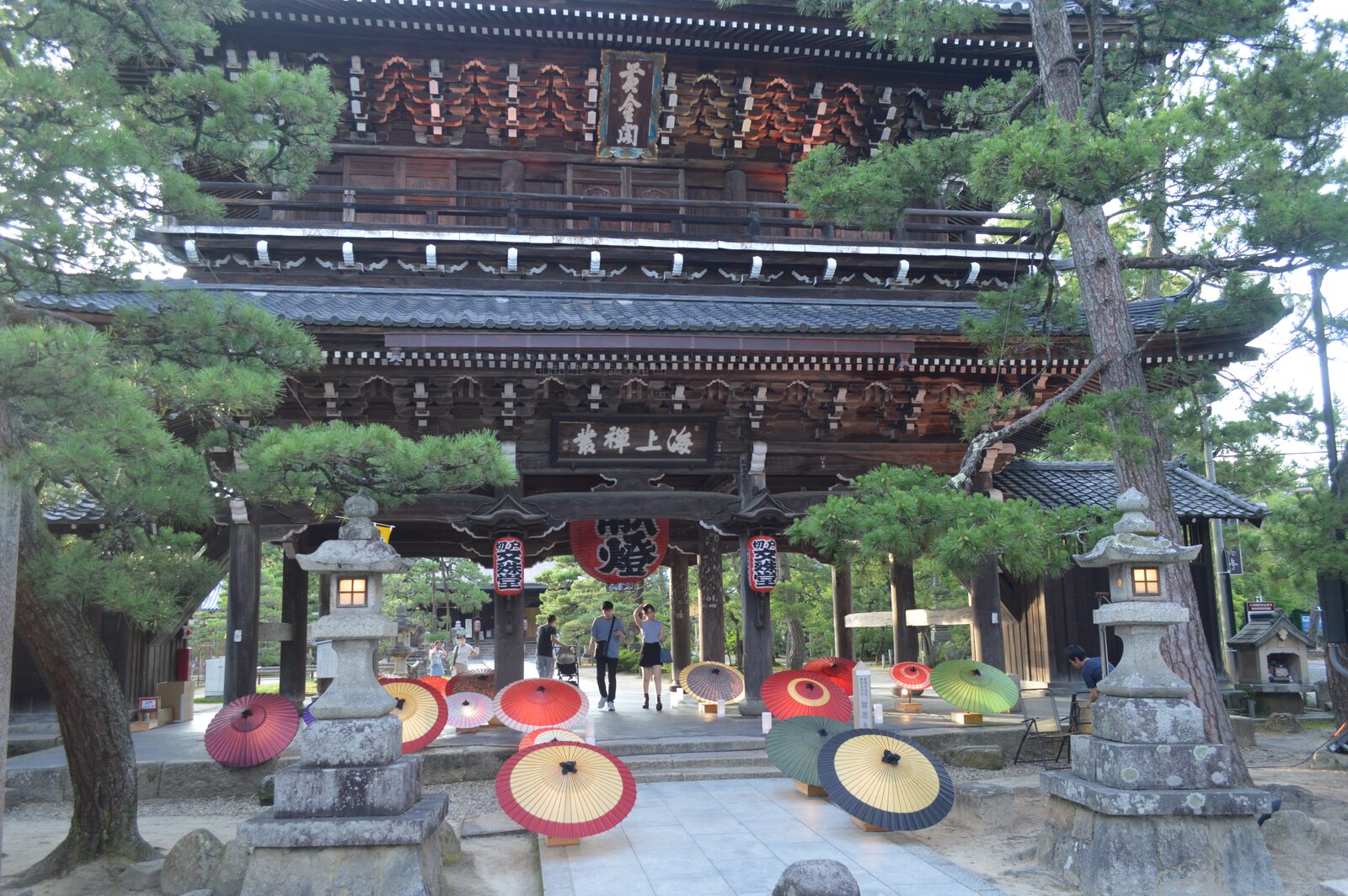
I am not alone here. Titans of Japanese Buddhism have openly professed the irrelevance of the historical Buddha, Siddhartha, and his teaching. Medieval Japanese Buddhists widely espoused a belief in mappō, the idea that Buddha's teaching is so lost to history that no one can achieve salvation through it anymore. Shinran, the founder of Japan's most popular Buddhist sect, preached that the teachings of Siddhartha had all passed into the dragon king's palace at the bottom of the sea.2 Now you may be wondering, why do I keep saying historical Buddha? What other Buddha is there? And this is where it really goes off the rails.
The Cosmic Buddha
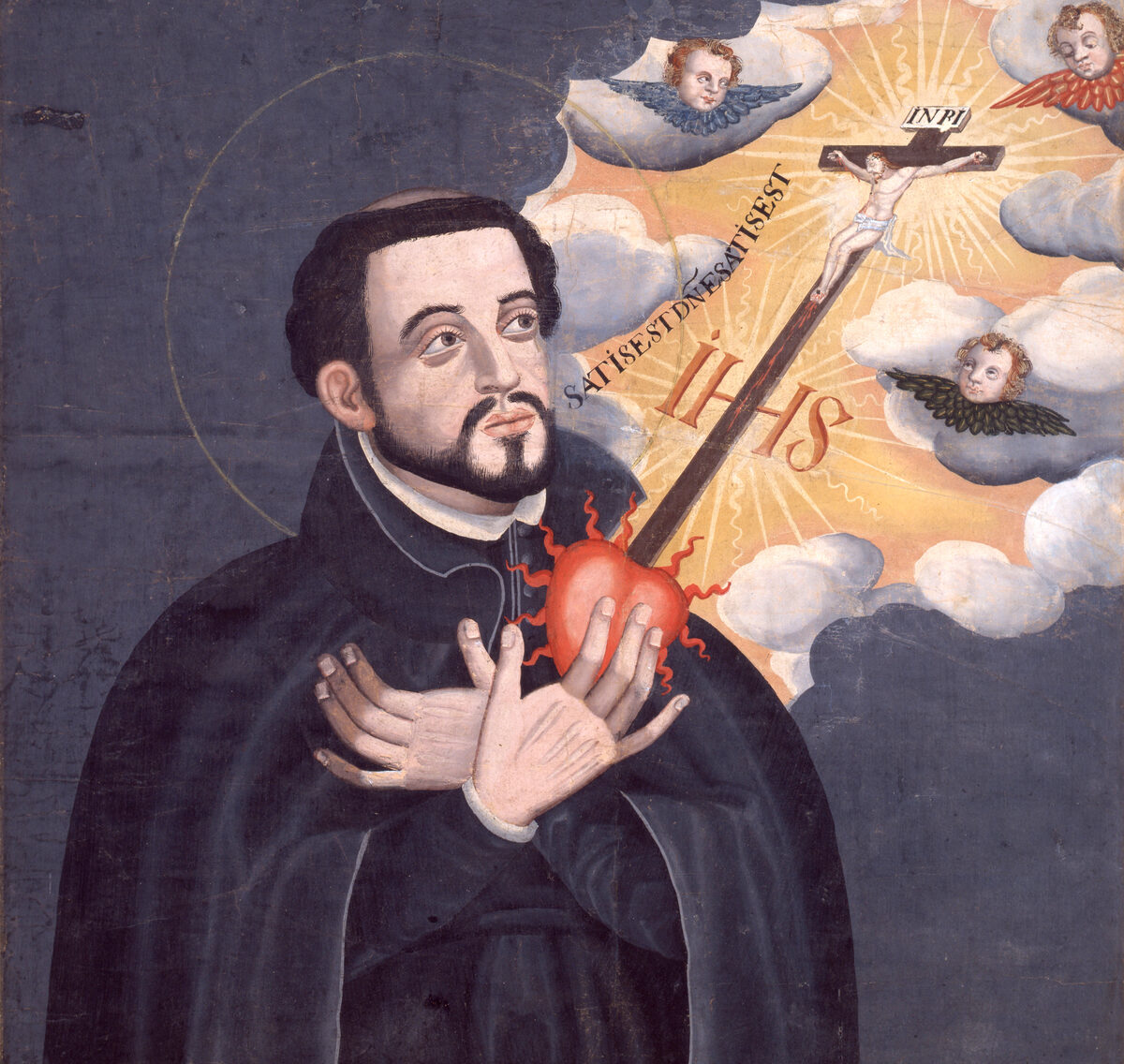
Many Japanese Buddhist sects believe in other Buddhas who exist in other dimensions. Some traditions understand all these inter-dimensional Buddhas as emanations of a single, cosmic Buddha, called Dainichi. Dainichi is about as close to capital-G God as Buddhism gets; he's both a cosmic deity and the ultimate reality. In my rural Japanese high school, my Buddhist classmates described themselves as believing in a supreme God like Christians or Muslims. When I asked what they meant by this, they alluded to Dainichi or Amida, a Buddha who's allegedly alive in an alternate reality. Ironically, when Francis Xavier landed in 1549, his Japanese convert Anjirō and the Shingon monks he consulted told him something similar, and for two years the Jesuit mission preached God as Dainichi before Xavier realized what he had done and switched to Deusu.
Unlike the Christian God, Dainichi is not the creator or source of the universe. Rather, he is the ultimate reality in which the universe participates. He is also where the universe is headed. Many Japanese Buddhist schools hold that every sentient being will eventually attain enlightenment,3 so Dainichi is not the origin of things but their terminus, the state into which all of existence finally resolves. Enlightenment consists, in broad terms, in awakening to this ultimate Buddha-nature rather than remaining trapped in ordinary phenomenal existence. The result is a conception of Buddhism in which the historical Siddhartha Gautama is merely one brief manifestation of an immensely larger cosmic Buddha (or series of Buddhas).
But Actually
There are academics and weebs who would object here, so let me take the objections in order. Yes, Siddhartha appears as a figure within Japanese Buddhist art. Zen temples often maintain images of him on the main altar, but Zen is not focused on the historical Siddhartha. Zen is primarily about the buddha-nature everyone already has within them. In other Mahayana schools, Siddhartha is at least one of many cosmic buddhas; in Zen soteriology, he's technically no different from you or me.
Nichiren built everything on the Lotus Sutra, but the Buddha of the Lotus Sutra is not the man who died at Kushinagar. He is an eternal Siddhartha who was never really born and never really died, which is to say a cosmic Buddha wearing Siddhartha's nametag. The schools where the numbers actually are, Pure Land and Shingon, focus on Amida and Dainichi, with Siddhartha as a footnote. So everywhere the historical Buddha shows up in Japan, he's been sidelined or at minimum de-historicized.
For context, it's worth looking at the actual map of Japan and seeing which schools of Buddhism are the most popular. In 1996, NHK surveyed religious affiliation in every prefecture.4 Unsurprisingly, Pure Land dominated, followed by Shingon and some local holdouts of Zen and Nichiren. Please interact with this beautiful map for more information:
The leading school in each prefecture, among those who profess a faith. Hover a domain, or tap one, to see what it worships.
NHK prefectural survey, 1996
I think this is the perfect example of where footnotes erase phenomenology. In a classroom setting, neutrality is always prowling under the guise of objectivity. It sounds like a criticism of Buddhism to say it doesn't care about its founder, but that in itself betrays a Western bias which views history as a mechanism for divine revelation. In the Bible, in the Quran, it matters whether or not Jesus and Muhammad were historical people. The factual details matter. In the East Asian Buddhist mentality, the historicity does not matter.
It's a kind of intellectual betrayal to force this standard on Buddhism. In the pursuit of neutrality, we construct a textbook image of something that completely misrepresents what it feels like, the phenomenology. It is impossible to attend a college course in the United States and get the vibe of what Japanese Buddhism actually is. I had the great fortune of studying under the fantastic Prof. James Robson, who heroically tried to break us out of this paradigm, particularly by emphasizing the commercialization of lay Buddhism. Those uniformed students at the Manjusri temple, buying exam luck by the hundred, are what Japanese Buddhism looks like from the inside. No textbook chapter on the Four Noble Truths will get you there.
The Other Road
Compare the Japanese picture to Thai Buddhism and we confront a fundamental disagreement about who Buddha is and what enlightenment is. Theravada predominates in Southeast Asia. It offers a far more austere cosmology compared to Mahayana in East Asia. In Theravada, there was a historical Buddha; he disappeared into nirvana; no, he's not a saint or god smiling down on us from paradise. Practically speaking, your best hope in this life is to gain good karma and be reborn as a monk. If you are a monk, you might be able to become an arhat and disappear into nirvana.
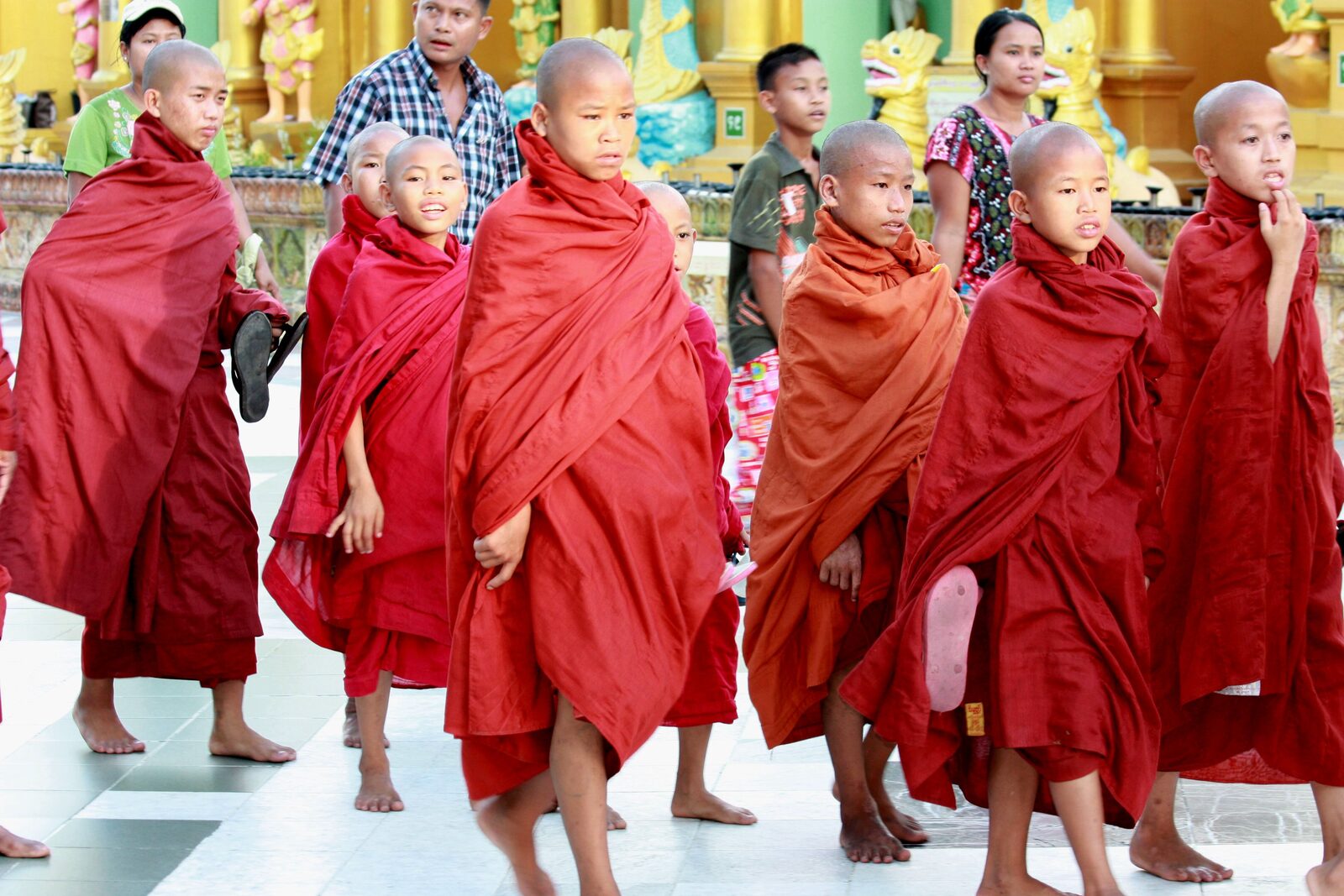
Mahayana Buddhists refer to this bleak theology pejoratively as Hinayana, the lesser vehicle of salvation. Naturally, there is a tradition among Western scholars of Buddhism that regards Theravada as the closest thing to the Buddhism taught by Siddhartha,5 with Mahayana as a later reinterpretation involving cheap grace, new scriptures, and countless Buddhas and bodhisattvas working supernaturally to bring about universal salvation.
This divide stems from a problem left open back in India: now that Buddha is enlightened, what's he up to? Can he do anything for me? Siddhartha himself refused to say. Asked whether a Buddha exists after death, he declined to affirm that he exists, that he doesn't, that he both does and doesn't, or that he neither does nor doesn't.6 As one Harvard professor put it to me, this amounts to saying nothing: no human being can actually conceive of what such a thing would mean. This leaves Buddhism pulling toward two very different religious possibilities. Enlightenment is self-annihilation: Buddha doesn't exist anymore. Or enlightenment is utter transcendence: Buddha became something like God.
In the depths of this gaping theological chasm, Buddhism earns the right to be called multiple religions. What we tend to call sects or schools, Shingon, Pure Land, Zen, Theravada, all have fundamentally different systems of salvation, scripture, and theology. They don't agree on whether there's a God or not, or what salvation is. It is therefore more clarifying to refer to different "Buddhisms" as opposed to a single religious system.
Footnotes
-
A note on names. Siddhartha Gautama is the man's name. Shakyamuni, "sage of the Shakya clan," is his epithet, and Shaka is the Japanese abbreviation of it; the polite form is Oshaka-sama and the formal one, in sermons and scholarship, is Shakuson. "Buddha" is not a name at all but a title, "the awakened one," which the Mahayana hands out to many beings. That is precisely the problem this essay is about, so I use Siddhartha throughout for the historical man and reserve Buddha for the title. ↩
-
Shinran, Shōzōmatsu wasan (Hymns of the Dharma-Ages), hymns 3 and 4: "the teachings that Sakyamuni left behind / Have all passed into the naga's palace," and "At the end of the semblance and in this last dharma-age, / Good practices have all gone into the naga's palace." Translation from The Collected Works of Shinran (Kyoto: Jōdo Shinshū Hongwanji-ha, 1997). The nāga palace, Ryūgū in Japanese, is the dragon king's palace under the sea where, in Buddhist lore, scriptures are kept when the world can no longer use them; it is where Nāgārjuna is said to have retrieved the Perfection of Wisdom sutras. Shinran's point is that in the last age they have gone back down. ↩
-
The doctrine is the One Vehicle, ekayāna, 一乗: the Lotus Sutra teaches that the three vehicles of hearer, solitary buddha and bodhisattva are expedients, and that there is only one vehicle, which carries every being to Buddhahood. The slogan form is 悉皆成仏, shikkai jōbutsu, "all without exception attain Buddhahood," which Tendai extended to grasses, trees and the land itself. It is not all of the Mahayana. Yogācāra, in Japan the Hossō school, holds the five-natures doctrine, 五姓各別, under which one class of beings, the icchantika, can never be saved. This was fought out twice: in fifth-century China, when Daosheng was expelled for arguing that even icchantikas have Buddha-nature and then vindicated by the full Nirvana Sutra, and in Japan in the Saichō versus Tokuitsu debate of the 810s, which the One Vehicle side won culturally even though Hossō survives at Kōfuku-ji and Yakushi-ji. The Christian cousin is Origen's apokatastasis, and the parallel runs deeper than it looks: no Buddhist hell is eternal, and the bodhisattva vow, Kṣitigarbha's above all, is explicitly to empty them. ↩
-
NHK放送文化研究所「現代の県民気質 全国県民意識調査」(1996), face-to-face interviews with 900 residents aged sixteen and over in each prefecture. The map shows the largest Buddhist school among respondents who named any faith at all; roughly a third did nationally, and in Okinawa almost none. The survey counted Tendai together with Shingon, so the red domain is the two combined, though Shingon outnumbers Tendai in every prefecture shown. I took the figures from Honkawa Yutaka's compilation in the 社会実情データ図録, figure 7770. ↩
-
This is the nineteenth-century picture, built by the Pali Text Society generation, Rhys Davids above all, who found in the Pali canon a rational, godless founder to their liking and treated everything Mahayana as later corruption. Gombrich and Obeyesekere called its Sri Lankan echo "Protestant Buddhism," and Gregory Schopen spent a career showing how much of the field's method was Protestant presupposition. Modern scholarship does not equate the surviving Pali tradition with what Siddhartha taught: the canon was written down in Sri Lanka in the first century BC, centuries after him, as one school's redaction; the earliest Mahayana sutras are as old as some of it; and Theravada is itself a reform tradition, shaped by Buddhaghosa in the fifth century and again by Sri Lankan and Burmese purges much later. What survives is the oldest complete picture, not the original one. ↩
-
The refusal is in the Pali canon, among the "undeclared questions" the Buddha set aside: Majjhima Nikāya 63, the Cūḷamālukya Sutta, and 72, the Aggivacchagotta Sutta, where the four alternatives about a Tathāgata after death are each declined. Nāgārjuna later turned the four-cornered refusal into a method, the catuṣkoṭi, but the tradition attributes the refusal itself to Siddhartha. ↩