Mozart's Greatest Fear
Mozart kept writing the same opera. Not literally, Die Entführung aus dem Serail, Don Giovanni, and Le nozze di Figaro are musically and dramatically distinct. But beneath the surface, these masterpieces share a common anxiety: a rich and powerful man tries to steal your wife. This is the central dramatic problem in all three works:
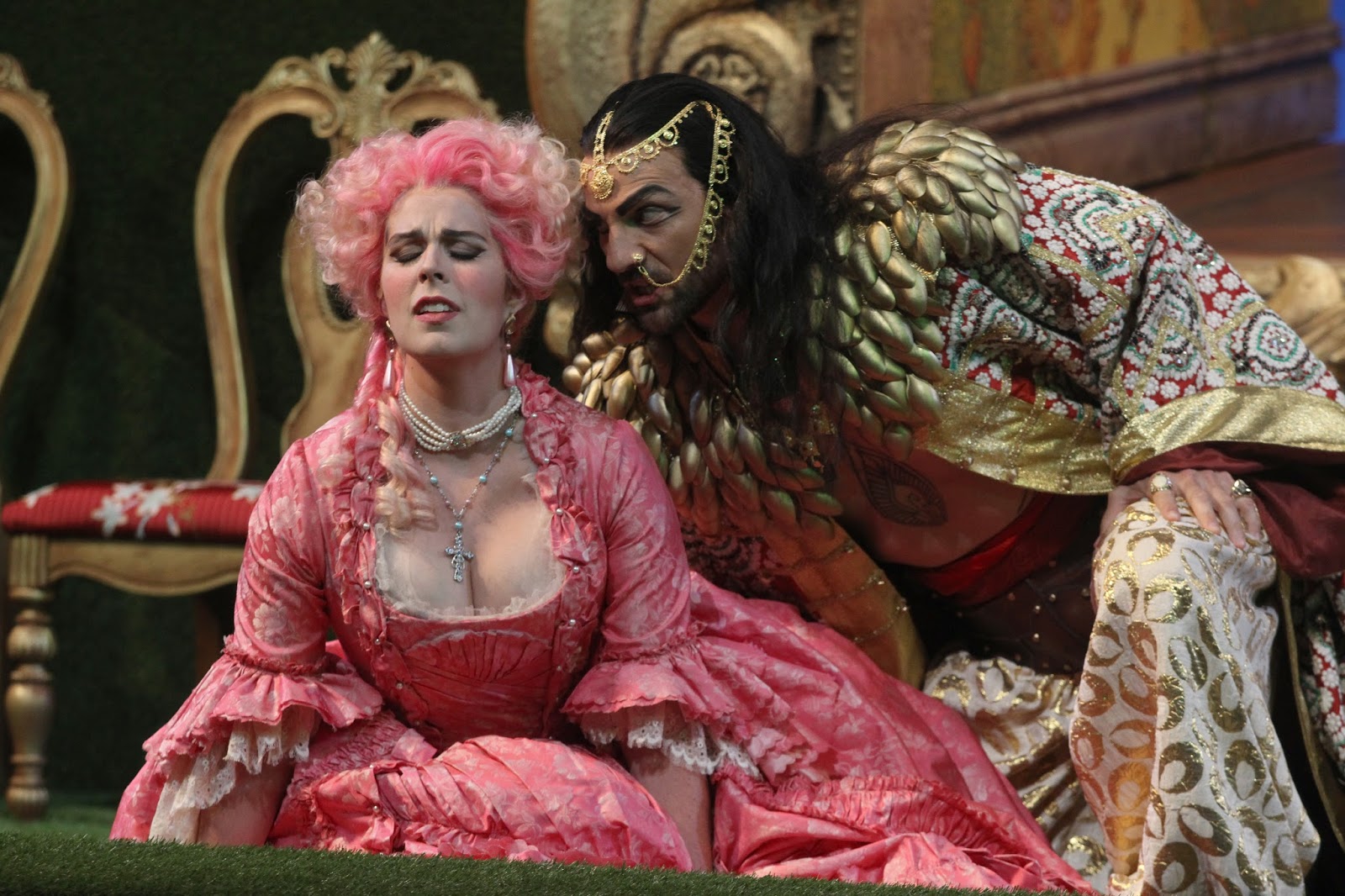
- In Seraglio, Pasha Selim holds Constanze captive in his palace and attempts to win her love while her fiancé Belmonte plots rescue.
- In Don Giovanni, the title character pursues Zerlina on her wedding day, luring her away from her peasant groom with promises of aristocratic elevation.
- In Figaro, Count Almaviva schemes to reinstate the droit du seigneur, the feudal lord's right to bed a servant on her wedding night, with Susanna, who is engaged to his valet Figaro.
Three librettos, same problem. Why?
Constanze: When the Pattern Turns Personal
If these operas share a recurring nightmare, power reaching down to claim the woman you love, it is tempting to ask why it preoccupied Mozart so intensely. In 1782, the answer would have been obvious to anyone close to Mozart. Die Entführung aus dem Serail premiered in July; Mozart married Constanze Weber the following month. Coincidentally, or perhaps not, the opera’s damsel in distress is also named Constanze.
Mozart did not invent these plots from scratch; he worked through librettists, as all composers did. But he chose what to set to music, and selection is a kind of autobiography. We cannot prove psychological motive from a libretto choice, but we can notice fixation. A talented commoner moving through aristocratic spaces, Mozart depended on patrons with real social power: counts, archbishops, princes. Everyone in that world understood the unspoken rule: rank could override consent. In that light, the "abduction plot" stops reading like mere exotic entertainment and starts to look like a fixation, an anxiety about what love and virtue can (and cannot) defend against power.
The Disguises
What's interesting is how Mozart approaches this theme across the three operas. The chronology matters: Seraglio in 1782, then Figaro in 1786, then Giovanni in 1787. This isn't a simple progression from disguised to direct; it's a bit more complicated than that.
Seraglio: The Oriental Other
Die Entführung aus dem Serail is set in Turkey. Pasha Selim is a Muslim. The entire scenario is framed as exotic, distant, safely other. European audiences could enjoy the drama without immediately recognizing themselves in it. The predatory aristocrat is a Turk; that is simply how things are over there.
This is Orientalism functioning as psychological cover. The anxiety is real, but it is displaced onto a foreign setting, where it becomes spectacle rather than self-indictment.
Yet Mozart complicates the frame. Pasha Selim is ultimately revealed to be a gentleman. He recognizes that although he possesses the power to force himself upon Constanze, what he truly desires is her love, and love cannot be compelled. Moved by her unwavering devotion to Belmonte, Selim releases her. Here, the savage Turk exhibits a moral restraint that the scenario has deliberately trained the audience not to expect.
The effect is quietly subversive. From the safety of an Orientalist fantasy, the opera turns back toward its audience and asks an uncomfortable question: can you, Christian nobles of Europe, live up to this standard? The foreign setting enables Mozart to stage the anxiety, but the resolution exposes it.
The opera does not fully abandon caricature. Selim’s nobility is counterbalanced by Osmin, the overseer, a comically cruel figure who embodies Ottoman brutality toward Christian women. Nor was this anxiety purely imagined. The abduction of Christian women into sexual slavery was a real and traumatic feature of Mediterranean life in the centuries preceding Mozart. Seraglio had historical teeth. Selim’s restraint matters precisely because the audience knew what the alternative looked like.
In this light, the opera’s moral claim sharpens: when powerful men exploit women because they can, they are no better than the tyrants they claim to despise. Or, put less politely: Mozart is warning his patrons that power without restraint is the true barbarism.
Figaro: The Criticism Laid Bare
A storm of controversy in its day, Le nozze di Figaro strips everything away.
Count Almaviva is not an exotic Turk like Pasha Selim, nor a mythic libertine dragged to hell like Don Giovanni. He is a contemporary European aristocrat, charming, cultivated, recognizably one of us. And he is attempting to bed his servant on her wedding night.
There is no Orientalist distance here, no foreign setting to absorb the discomfort, and no divine punishment to discharge it. What replaces them is the familiar machinery of opera buffa: clever servants, exposed hypocrisy, and a powerful man brought low just enough to restore equilibrium. The Count apologizes; the social order survives; the opera ends happily. But this is precisely the point. By resolving real abuses of power through comic convention, Figaro insists that these tensions are not exotic or exceptional. They are ordinary and domestic. They belong to everyday aristocratic life.
That was the problem. The source material, Beaumarchais’s play, had been banned across Europe for its open contempt toward hereditary privilege. Its most incendiary line was impossible to miss: “What have you done to deserve your advantages? You took the trouble to be born, nothing more.” Even in Mozart and Da Ponte’s softened adaptation, the class critique remains unmistakable. Figaro is cleverer, more moral, and more self-aware than his master, and the opera never lets the audience forget it.
Comedy is the Trojan horse. By inviting laughter, Figaro smuggles in an argument that tragedy could not safely make. Aristocratic authority is neither natural nor moral, merely inherited and frequently abused. The Count is not punished by God or fate. He is corrected by those beneath him. His final humiliation is not death, but apology.
In Figaro, Mozart removes every mask. When power reaches for women simply because it can, the problem is no longer foreign, monstrous, or mythic. It is uncomfortably close to home. And that proximity perhaps explains why the opera’s initial reception was cautious and its early run short in comparison to the feverish success of Seraglio.
Don Giovanni: Retreat to the Moral High Ground
Don Giovanni comes after Figaro, and it is worth asking why Mozart returned to a safer frame.
Giovanni is a European aristocrat, Spanish but unmistakably familiar. His predation is no longer implied or procedural. It is explicit: attempted rape, serial seduction, and entitlement grounded in rank. Unlike the Count, Giovanni does not scheme quietly. He takes. He flees. He boasts. The opera opens with violence, not flirtation, and it never allows the audience to forget what kind of man he is.
But Giovanni is punished.
The Commendatore’s statue drags him to hell, and the opera closes with a moral ensemble that spells out the lesson: such is the end of the evildoer. The critique is permitted because it is contained. Giovanni’s behavior is not merely exposed; it is annihilated. By the final curtain, justice has been done, order restored, and the audience reassured.
This matters. Where Figaro leaves power structurally intact and correctable only through social embarrassment, Don Giovanni restores a cosmic hierarchy. Mozart wraps his class critique in the language of traditional Christian morality. Sin is named. Judgment is rendered. Hell awaits.
The Commendatore embodies the moral counterweight. He is the antithesis of Giovanni. Where Giovanni kills in order to despoil, the Commendatore dies defending his daughter’s honor. The old father’s return as an avenging statue is not merely theatrical spectacle. It is divine justice made visible. God intervenes where society cannot.
This framing makes recognition safe. The audience knows men like Don Giovanni. But they also know how the story ends. Unlike the Count, Giovanni is not corrected. He is removed. The system works, if not through law or class reform, then through God’s final judgment.
After Figaro’s controversy, Don Giovanni represents a retreat to familiar ground. Power is no longer negotiated or forgiven. It is condemned and destroyed. The anxiety remains, but it is displaced upward into theology. If earthly hierarchies fail, heaven will not.
And that promise, however severe, was far more reassuring to the audience.
What This Tells Us
Mozart was twenty-six when he wrote Seraglio, thirty for Figaro, and thirty-one for Don Giovanni. These are the operas of his maturity, composed in his late twenties and early thirties. He was married. He was financially precarious. He was a genius commoner living in a world ruled by hereditary nobility and dependent on aristocratic patronage for survival.
The pattern across these operas reveals an artist working through his own anxieties. The threat of the powerful man, the count, the don, the pasha, was not abstract. It was real. Mozart returned to it again and again. In Figaro, he staged that threat directly and discovered how dangerous such clarity could be. In Don Giovanni, he recontained the critique within the safer language of Christian judgment and cosmic justice.
The music is sublime. The psychology is personal. And the class critique, when Mozart was brave enough to drop the disguises, made him dangerous to the very people he depended on.
In short, Mozart kept writing the same opera because he was living in it.
You might also like:
- Wicked and the Crisis of Competence · The gap between seeing clearly and being heard, staged through Glinda and Elphaba.
- The Faery Prince; or, Why There Is a Door to Eden · Aesthetic sensitivity without moral recognition, from Xerxes to Handel.